Nature
 PUBLISHED
 1
1


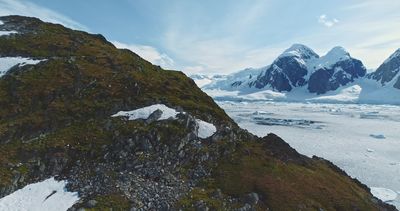


Regions of Antarctica are being rapidly “greened” by growing vegetation as our planet warms, suggests a new study. In the last 40 years, the area of the northern Antarctic Peninsula covered by greenery – mostly mosses – has increased by more than 1000%.
Global warming affects our whole planet, but polar regions are heating up more rapidly. Scientists at the University of Exeter and the University of Herefordshire, working with the British Antarctic Survey, used satellite data to assess how global warming had changed the landscape of the Antarctic Peninsula.
In 1986, the Peninsula was virtually vegetation-free – less than one square kilometer (0.4 square mile) was green. But in 2021 – the latest timepoint analyzed in the study – vegetation covered 12 sq kilometers. That increase is roughly the size of 2,000 football fields. The increase also ramped up in the last five years of the study, coinciding with thermometers across the globe hitting record highs.
Thomas Roland, an environmental scientist at the University of Exeter and co-author of the study, said that the plants spreading across the peninsula were mostly mosses. “The landscape is still almost entirely dominated by snow, ice and rock, with only a tiny fraction colonized by plant life.
"But that tiny fraction has grown dramatically—showing that even this vast and isolated 'wilderness' is being affected by anthropogenic climate change,” Roland said in a statement.
The authors said that their study should prompt further work to understand how environmental and climate shifts were allowing green growth across the Peninsula.
As the mosses spore, grow, and decompose, they will form soil that will make it easier for other plants to spread to the continent, said the authors. “This raises the risk of non-native and invasive species arriving, possibly carried by eco-tourists, scientists, or other visitors to the continent,” said coauthor Olly Bartlett, a geographer at the University of Herefordshire.
The Antarctic Peninsula protrudes 800 miles (1,300 kilometers) out from the northern side of Antarctica, reaching toward South America. The mountainous region has experienced record-high temperatures in recent years – as has the rest of the continent.
"Our findings raise serious concerns about the environmental future of the Antarctic Peninsula, and of the continent as a whole. In order to protect Antarctica, we must understand these changes and identify precisely what is causing them,” added Roland.
The study was published in Nature Geoscience.