Nature
 PUBLISHED


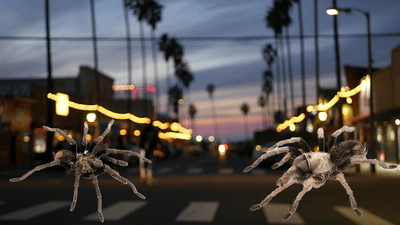


If you go down to San Diego today you could be in for a big surprise. Creeping out of holes and cracks in Southern California are two species of tarantula that are setting off for their annual mating ritual.
The California black tarantula (Aphonopelma eutylenum) and the San Diego bronze tarantula (Aphonopelmus reversum) are the two species in question – and while neither is particularly dangerous to humans, they can both deliver a nasty bite and have hair that will irritate the skin.
Rural areas such as El Cajon, Ramona, and Poway may be particularly affected as potentially thousands of these tarantulas appear and start looking for love.
"Around this time, it’s like clockwork – right around the middle of August. There are two species of tarantulas in San Diego, and both start their mating season. Right around this time is when the males are leaving their burrows and they’re starting to look for females," said Cypress Hansen, Science Communications Manager at the San Diego Natural History Museum in a statement in CBS8 in 2022.
Males are most likely to be roaming the streets but may not survive this summer of love as they are occasionally eaten by the females after mating. Female tarantulas will make silk cocoons for the eggs which could be laid in numbers up from 75 to 1,000. The female will even guard the eggs for around 8 weeks until they hatch.
To get to that point though, the males will tiptoe into the underground lair of the female and attempt to transfer sperm to her using his pedipalps. “They use this glove-like apparatus to dispel sperm, and then it deflates like a balloon. After laying down a layer of sperm over silk web, the male heads for the hills – because if he lingers, the female will usually eat him." Forest Urban, manager of the invertebrate program with the Natural History Museum of Los Angeles told the Guardian in 2019.
Female tarantulas can live as long as 25 years in the right conditions, while males typically survive only 5-8 years – they typically die around six months after mating.


 1
1