Nature
 PUBLISHED


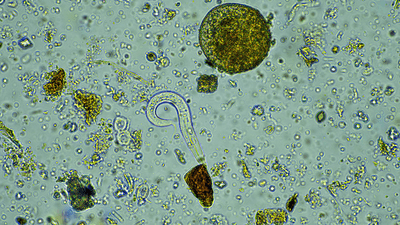


40 renowned scientists have warned of the dangers of creating "mirror life", and more specifically "mirror bacteria", highlighting the risks it could pose to the lifeforms already on Earth. Though mirror bacteria could be useful in therapeutics, the risks of creating such lifeforms could significantly outweigh the benefits.
So, what exactly is "mirror life"? For that, you need to know a little about the molecules of regular, bog-standard life.
"All of the biomolecules that make up life, like DNA and proteins, have a handedness to them, just like your hands," Michael Kay, professor of biochemistry in the Spencer Fox Eccles School of Medicine at University of Utah and an expert on mirror-image pharmaceuticals, explains in a statement.
"They could, in theory, come in a left-handed or a right-handed version. Billions of years ago, life on Earth standardized on left-handed proteins. All life that evolved from that has continued to use left-handed proteins."
You may remember from high school (if you aren't currently there) that sugars are right-handed, while nearly all amino acids, used by all life on Earth to build proteins, are left-handed.
"This selective chirality defines how molecules interact in living systems. It influences how drugs and enzymes (biological catalysts that speed up reactions) function in our body, as well as how we perceive flavours and smells," Mark Lorch, Professor of Science Communication and Chemistry at the University of Hull explains in a piece for The Conversation.
"For example, the molecule carvone can smell of either spearmint or caraway seeds, depending which 'mirror' version of the molecule you get this scent from."
So far, nobody has attempted to construct anything approaching bacteria using "mirror" molecules, but scientists involved in the 300-page report believe we may be capable of doing so in over a decade.
"Driven by curiosity and plausible applications, some researchers had begun work toward creating lifeforms composed entirely of mirror-image biological molecules," the team wrote in Science. "Such mirror organisms would constitute a radical departure from known life, and their creation warrants careful consideration."
"In isolation, they would behave identically to natural-chirality bacteria—mirror bacteria would grow under the same physical conditions, and would grow at the same rates on achiral nutrients," the team adds in their technical report. "But because natural life is chiral, interactions between natural organisms and mirror bacteria would be profoundly altered."
The team believes that there are substantial risks to creating mirror bacteria for multicellular organisms such as us, tempting though it may be.
"Chiral interactions, which are central to immune recognition and activation in multicellular organisms, would be impaired with mirror bacteria," the team writes. "Our analysis suggests that mirror bacteria could broadly evade many immune defenses of humans, animals, and plants."
The main risk of this is that with weakened immune recognition, mirror bacteria would be able to replicate freely in a host animal or plant, and may be resistant to antibiotic, with potentially fatal consequences for the host. As well as this they could evade predation thanks to their reversed chirality, and perhaps be resistant to being consumed, allowing them to colonize a range of environments. Perhaps more importantly, mirror bacteria may really mess around with the ecosystem, causing irreversible ecological changes where they spread.
The team suggests some ways which scientists could study mirror bacteria with reduced risk. For example, they could intentionally create a bacteria which depends on molecules not found in nature to live, making it pretty tricky for the bacteria to thrive outside of a controlled laboratory environment. But ultimately they say that human error or evolution of the bacteria themselves could still occur.
The team notes that mirror molecules could have potential therapeutic applications, but ultimately concludes that the potential benefits cannot justify the potential risks.
"We hope that this commentary will kick off extensive discussions on this topic with a broad group of stakeholders," Kay added. "Once a mirror cell is made, it's going to be incredibly difficult to try to put that genie back in the bottle."
The paper is published in Science.