Space and Physics
 PUBLISHED
 1
1


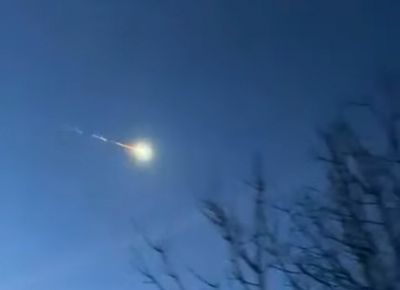


On Sunday, March 8, 2026, the sky of central Europe was lit up by a fireball streaking across the sky. It was seen in France, the Netherlands, Belgium, Luxembourg, and Germany, mostly breaking apart in the atmosphere due to air resistance. Space rocks move quickly, and the atmosphere is dense enough to be a major obstacle to meteors trying to get to the ground. Part of this object did indeed reach the surface, with some dangerous consequences, but fortunately with no casualties.
The fireball happened at 6:55pm local time, and just minutes later, rocks landed. It has been reported that fragments of this meteor hit the ground (becoming meteorites) over a large area, even hitting a roof in the city of Koblenz and leaving a hole the size of a soccer ball. No more details have been shared at this time.
"This evening around 7:00 p.m., a burnt-up celestial body struck the roof of a residential building in the Güls district of Koblenz. No one was injured," the Koblenz police is reported to have said.
Nearly 3,000 sightings, photos, and videos of the fireball have been reported to the International Meteor Organization (IMO).
The European Space Agency (ESA) reports that the fireball shone for 6 seconds before falling apart. ESA’s Planetary Defence team estimates that the space rock was at most a few meters in diameter. It was definitely nowhere close to the size of the Chelyabinsk bolide, whose shockwave broke windows and lifted a warehouse roof (sending over 1,000 people to the hospital) when it fell over Russia in 2013.
Objects larger than 10 meters (33 feet) hit our planet about once every 10 years, while meter-sized objects can hit our planet once every couple of weeks. The risk of being affected by a meteorite impact is actually higher than some people might realize, mostly due to how many people would be affected by such an event.
"Although everyone's individual situation and risk are different, on average, it's slightly more likely that a >140-meter asteroid or comet hits the Earth than an individual is struck by lightning," Professor Carrie Nugent from Olin College, lead author of a study on the likelihood of death by asteroid, told IFLScience.
"An impact is less likely than experiencing carbon monoxide poisoning. Although an asteroid impact is pretty unlikely to occur in any given year, the probability is not zero, and might be higher than some people expect. But, just like carbon monoxide poisoning is preventable, so is an asteroid impact – if we have enough time to prepare."
In terms of direct injury or death from a meteorite, there is only one person confirmed to have been hit by a meteor strike. Her name was Ann Hodges, and she got a nasty bruise on her upper hip after a grapefruit-sized meteorite went through her roof and bounced off her wooden radio before hitting her. There have been reports of a boy being hit by a small chunk of meteorite, and he was not hurt. A series of casualties and a death have been found in a historical event from 1888.
If the meteorites are given to scientific institutions, there might soon be an update on what kind of asteroid it was before it took a trip through the atmosphere.