Space and Physics
 PUBLISHED


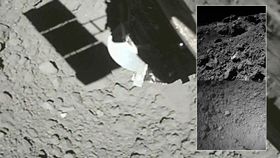


On July 11, the Japanese spacecraft Hayabusa2 successfully performed its second touchdown on the surface of asteroid Ryugu. The touchdown was necessary to collect the first-ever sample of material from below the surface of an asteroid. This feat was many months in the making. The probe shot a projectile in April to release the material and only in July was it safe to go down and collect it.
Now, the Japanese Space Agency, JAXA, has put together a video of the images taken by Hayabusa2 as it approached the asteroid, collected the sample, and then bounced back off into space, lifting the loose soil from the surface of Ryugu.
The video was created by stitching together images captured by the spacecraft’s CAM-H instruments over the 7 minutes and 50 seconds it took for it to go down and fly back up. It starts with images at about 8.5 meters (28 feet) from the surface and ends when Hayabusa2 is about 150 meters (492 feet) from the asteroid. The images were taken at intervals between 0.5 and 5 seconds.
The video has been sped-up, but it still shows how careful the control team had to be to maneuver the craft. Hayabusa2 collected the first subsurface material of a celestial object beyond the Moon. Asteroids have not changed much in the billions of years that they have existed. As the team said when the collection was announced, they manage to get a piece of the history of the Solar System.
In a few months, the craft will move from its current orbit to a homing trajectory, which will take it near our planet in December 2020. It will then
Before that, the probe still has some work to do around Ryugu. It will soon release a rover on the surface of the asteroid, its fourth from the beginning of the mission. It will also continue to study the asteroid until its final goodbye.
Dropping the sample might not be the end of the mission, though. The probe is coming back to Earth with a lot of fuel, so there’s a possibility that it will be sent back into deep space to study another asteroid.