Humans
 PUBLISHED




New research has found that lowland populations of Papua New Guinea have Denisovan genes that may have helped them develop a resistance to malaria. The findings are part of a larger study that examined whole-genome sequences from highlanders and lowlanders living in the southwestern Pacific country.
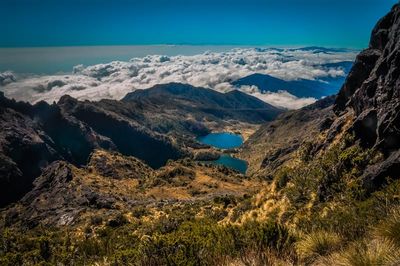
Papua New Guinea (PNG) has a diverse range of environments, each of which presents different challenges to the people living there. The difference between lowlanders and highlanders is indicative of this. The former are exposed to pathogens, such as malaria, that are not an issue for the latter, while the latter have to survive in low oxygen environments caused by the high altitude.
Despite each population clearly adapting to endure in such different environments, little is known about the specific nature of these adaptations.
That’s where this new study comes in. The data was collected by the Papuan Past project, which brought together researchers from the universities of Tartu (Estonia), Toulouse (France), and Papua New Guinea.
“We explored the signatures of selection in newly sequenced whole genomes of 54 PNG highlanders from Mt Wilhelm (Chimbu Province) and 74 PNG lowlanders from Daru Island (Western Province),” project lead Dr François-Xavier Ricaut explained in a statement.
“We hypothesised that the genomes of both populations have been shaped differently to mitigate the detrimental effects of their respective environments”.
In this study, the genetic variants under selection were associated with blood-related phenotypes.
The team found that one of the candidates for selection in lowlanders was something of non-Homo sapiens origin. The Denisova, an extinct archaic hominin population that lived in Asia before modern humans settled in Papua New Guinea (around 50,000 years ago), appear to have left genes that have benefited their human descendants. This is because these archaic humans interbred with early humans and passed on part of their genome.
The researchers believe that a genetic mutation in Denisovans that impacts a specific protein structure has survived into Papua New Guinean genomes.
“It looks like the altered protein is beneficial for the lowlanders to survive in their environment. Although we do not know the exact cause of this selection, this mutation might help the lowlanders overcome malaria,” Dr Mayukh Mondal explained.
In contrast, the highlanders show a genetic variant that may impact their red blood cell count. A higher red blood count helps the highlanders live at an altitude where the oxygen level is lower. The selected variant in the lowlanders, on the other hand, was associated with the percentage of white blood cells, key components of the immune system.
"This supports the idea that hypoxia might have been the main driving force of selection that has acted on Papua New Guinean highlanders. However, specific pathogens might have shaped the genome of lowlanders through selection," added Dr Mathilde André.
Interestingly, as Dr Nicolas Brucato pointed out, both these variants “also affect the heart rate of individuals with those mutations. This multiplicity highlights the complexity of interpreting the role of genetic mutations. One mutation can affect multiple phenotypes altogether."
The authors conclude the study illustrates how adaptation to the local environment has shaped the genomes and resulting traits, or phenotypes, of different Papua New Guinean populations. It also highlights just how important it is to investigate populations with diverse backgrounds in helping scientists fully understand the intricacies of human biology.
The study is published in Nature Communications.