


 Humans
 PUBLISHED




Sleuthing investigators have been sailing across the Pacific on the hunt for the legendary aviator Amelia Earhart and they’ve just touched down on a tropical island ridden with giant, meat-eating crabs.
A new search for Earhart
After a five-day voyage, a 17-person crew from the Archaeological Legacy Institute and Purdue University touched down on Nikumaroro Island in the South Pacific on Monday, October 12.
The researchers are believed to be the first people to set foot on the coral atoll in at least seven years – and when you ponder the vastness of the Pacific Ocean, that won’t come as a surprise.
They’ve ventured all this way, some 830 nautical miles, to investigate the Taraia Object, a shape seen in aerial and satellite images that appears to be vaguely plane-shaped, lying in a lagoon on the island.
The visual anomaly has attracted much attention from investigators and internet sleuths looking into the mysterious disappearance of Amelia Earhart, who vanished in the South Pacific alongside navigator Fred Noonan in July 1937 while attempting to circumnavigate the globe roughly along the equator.
Others have suggested the Taraia Object is just a fallen tree or a rock, but this latest expedition plans to inspect the relic with boots on the ground.
“We will start our remote sensing work using magnetometers and sonar to get a better idea of what is there before we actually uncover it. After that is all done, we will uncover it using a hydraulic dredge,” Rick Pettigrew, expedition leader and executive director of the Archaeological Legacy Institute, said in a statement.
Meddling crabs
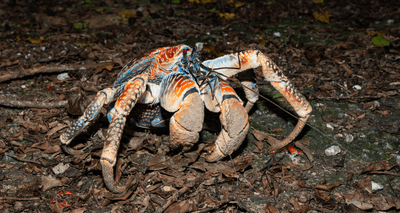
The team spent the first night onboard their ship, named Marin Mainiku, because the shores were riddled with coconut crabs, the largest land-living arthropod on Earth with a formidable pinch-force.
While this species (Birgus latro) does not actively hunt humans, they are unfussy omnivores that will eat pretty much anything they can get their claws on, from rats and tortoises to fellow crabs. There are also rare instances of them climbing trees and attacking live birds.
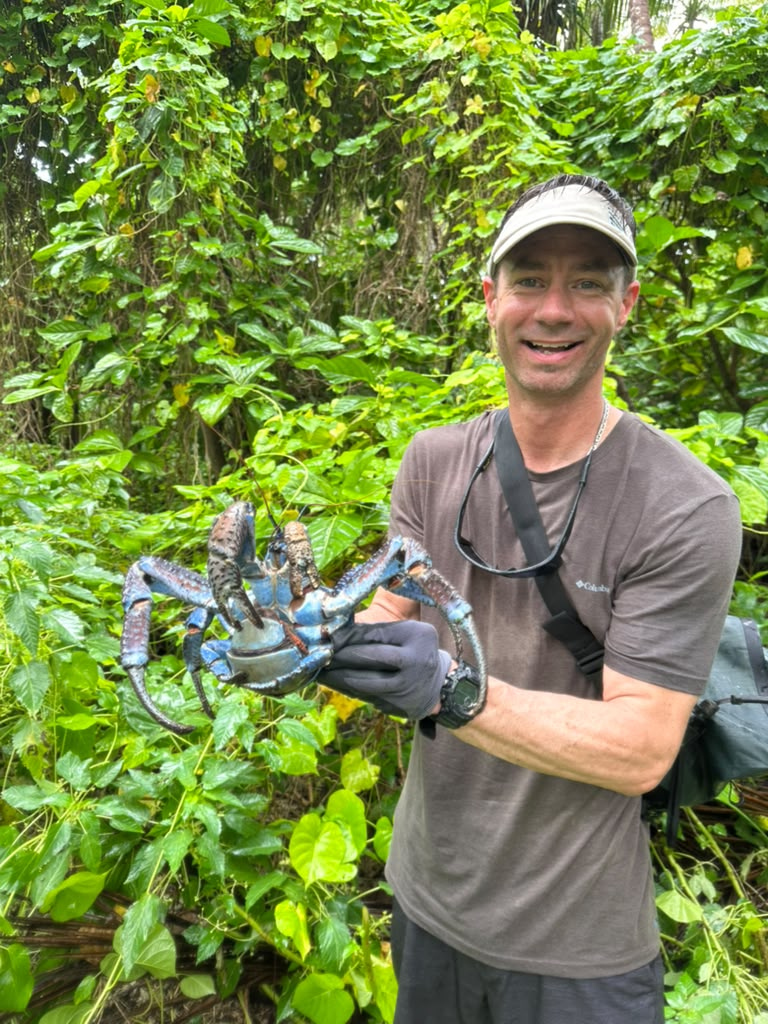
Fortunately, these formidable crustaceans haven't hampered the team's efforts too severely.
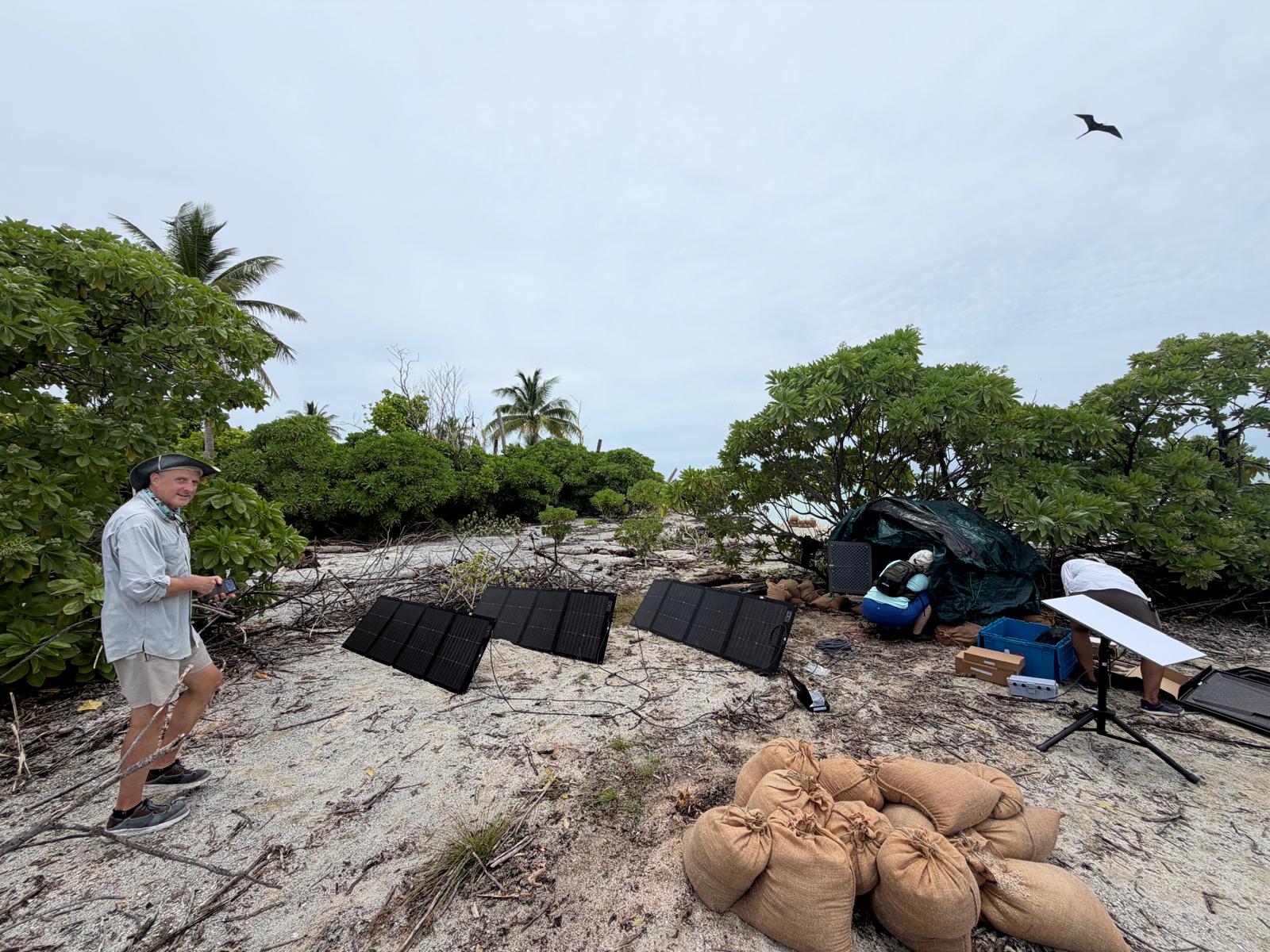
The following day, an offshoot of the crew took some smaller boats into the lagoon of the Taraia Peninsula, where they’ve set up camp and are clearing a path to start their fieldwork on Wednesday, October 14.
In the latest update, on October 13, the researchers said in a statement: “The team used a combination of machetes and hand chain saws and finished cutting a trail to the lagoon within two hours."
"At least four coconut crabs were encountered along the way, but they posed no threat to the operation," they added.
Earhart's mysterious disappearance
As the first woman to make a nonstop solo transatlantic flight, Earhart was a celebrity of her time and an aviation pioneer who embodied the romance of exploration. Her sudden, unexplained disappearance while flying over the South Pacific sparked global curiosity and continues to fuel intrigue to this day.
The leading theory suggests that Earhart and Noonan crashed around Howland Island, but some researchers believe that Nikumaroro Island, over 600 kilometers (372 miles) away, also deserves the attention of investigators.
This ties back to a story from 1940 when British colonists were exploring Nikumaroro and came across 13 human bones. The rest of the skeleton, it seems, was picked apart by the island’s coconut crabs and lost to the sea. Since the island is relatively near the equator, some suspected the crab-ravaged remains belonged to Earhart.
A later analysis revealed the bones belonged to a man, indicating they were not those of Earhart. Nevertheless, the theory has not been totally nixed.
This is just one of the many ideas of what happened on that fateful day in July 1937. Others suggest they survived as castaways and eventually perished elsewhere in the Pacific, while wild theorists suggest the pair were captured by Imperial Japanese forces in the Marshall Islands.
Of course, there is the stark, less glamorous possibility that the plane simply crashed into the immensity of the Pacific Ocean and quickly sank beneath the waves.


 2
2