Nature
 PUBLISHED
 2
2


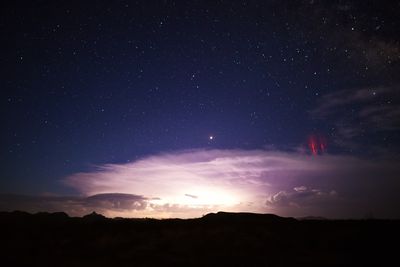


Red sprites have been caught dancing in the skies above Hawai’i thanks to the Sabaru-Asahi Star Camera atop Maunakea and some eagle-eyed viewers.
The Subaru-Asahi Star Camera is a 24/7 livestream of the night sky that is in the habit of catching some very strange phenomena in the Hawaiian night sky. The sprites were caught at around midnight on February 4-5.
Red sprites are electrical discharges, a bit like lightning. However, instead of going down to the ground, they go up in the atmosphere, reaching 50 to 90 kilometers (30 to 55 miles) up – almost to the edge of space.
The color red is due to nitrogen interacting with the electric charge. The sprites happen in response to lightning strikes, which release positive electric energy into the sky. The charge moves similarly to lightning, but as it’s much higher in the air, it comes into contact with nitrogen floating in the Earth's atmosphere. When the nitrogen meets the electric charge, it emits a red glow, which are the wiggly tendrils we view like tentacles.
Sometimes they form in epic jellyfish-like shapes and some appear simply as red columns in the sky, like here. They were first discovered in 1989 and have since been seen over every continent except Antarctica. Dark skies free from excessive light pollution make it easier to see faint objects like sprites, and so views like this are becoming increasingly harder to capture due to the increasing spread of light pollution.
These rare events last just a few tenths of a second and are often obscured from view by storm clouds as they occur so high up. Luckily, the Subaru-Asahi Star Camera was scanning the night sky and caught their brief visit to Earth.