Nature
 PUBLISHED





Researchers have engineered a courtship ritual from one species of fruit fly into another using genetic modification.
A Japanese research team tweaked a single gene in the fly Drosophila melanogaster, causing it to display a courtship ritual only previously seen in Drosophila subobscura.
The research shows that manipulations of relatively small chunks of genetic code can alter complex behaviors.
Dating as a fly is a complicated game. In the majority of fly species, D. melanogaster included, male flies vibrate their wings, composing elaborate courtship “songs” to seduce their mates.
But D. subobscura have clearly decided the route to the heart is through the stomach. Males regurgitate food and offer their vomit to potential hookups as a loving gift.
D. melanogaster and D. subobscura are relatively closely related species, but they still diverged from each other around 30-35 million years ago. In that time, a curious difference has emerged between the two species’ brains.
In vomit-donating flies, the brain’s courtship center has become linked to the neurons that produce insulin. In the ballad-penning D. melanogaster, these two brain areas aren’t connected.
The researchers discovered this change by probing D. subobscura’s genome. They added in short chunks of DNA that prevented specific genes in certain cells of the flies’ brains from activating unless they were heated up.
They monitored the flies’ courtship moves and saw that their charming regurgitation behavior only appeared when they turned on a group of just over a dozen insulin-releasing neurons in the flies’ neurosecretory center, the pars intercerebralis.
In both species, a single gene, called “FruitlessM” or “FruM”, governs male courtship. They found that in D. subobscura, the small group of insulin-producing cells also made the FruM courtship protein and wired into courtship brain circuits. This wasn’t the case in D. melanogaster.
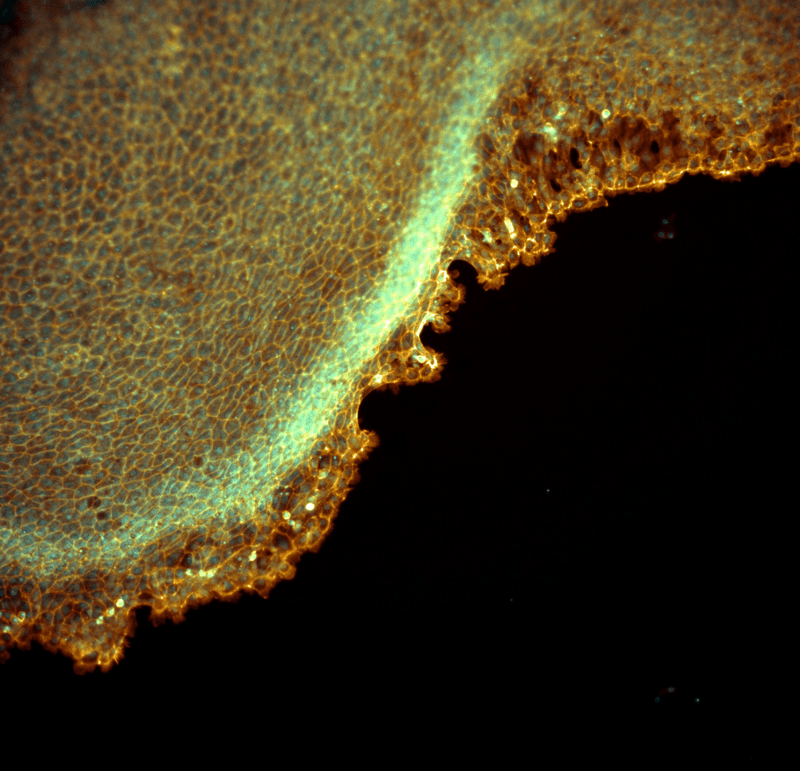
The team then used gene modification to activate the FruM gene in D. melanogaster’s insulin-producing neurons. “The cells grew long neural projections and connected to the courtship center in the brain, creating new brain circuits that produce gift-giving behavior in D. melanogaster for the first time,” said Ryoya Tanaka, neurobiologist at Nagoya University and co-author of the new study in a press release.
Tanaka has studied Drosophila mating for nearly a decade, previously mapping both species’ courting behaviors and how fru influences them in a 2017 paper.
In contrast, turning off this small gene group in D. subobscura stopped them from regurgitating.
Yusuke Hara, a study co-author and researcher at the National Institute of Information and Communications Technology, said, “Our findings indicate that the evolution of novel behaviors does not necessarily require the emergence of new neurons; instead, small-scale genetic rewiring in a few preexisting neurons can lead to behavioral diversification and, ultimately, contribute to species differentiation.”
The study is published in the journal Science.