Health and Medicine
 PUBLISHED
 1
1


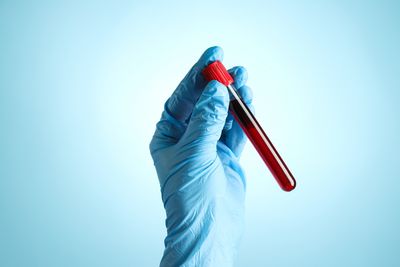


Small RNA molecules coursing around your bloodstream could reveal secrets about your future health. According to a new study, a blood test that detects these molecules could be used to predict who is likely to live longer and guide healthcare decisions accordingly.
Science is learning more and more about the important roles that small, non-coding RNA molecules play in the body. The discovery of one class of these, microRNAs (miRNAs), was deemed worthy of a Nobel Prize in 2024, and they crop up in research about everything from gut health to hair loss to longevity.
This new study centers around the much less-studied PIWI-interacting RNAs (piRNAs), which are slightly longer and more complex than miRNAs.
“We know very little about piRNAs in the blood, but what we’re seeing is that lower levels of certain specific ones is better,” said senior author Virginia Byers Kraus, MD, PhD, a professor at Duke University School of Medicine, in a statement.
“When these molecules are present in higher amounts, it may signal that something in the body is off‑track. Understanding why could open new possibilities for therapies that promote healthy aging.”

The researchers, co-led by Kraus and Dr Sisi Ma of the University of Minnesota, used a collection of over 1,200 blood samples from adults aged 71 and over who were enrolled in a previous North Carolina-based study. They were able to cross-reference with national records to obtain participants’ survival data.
Using a combination of predictive and causal modeling approaches, the team analyzed 187 indicators of health and 828 different small RNA molecules, with a particular focus on the piRNAs. This type of modeling makes it possible to pull out causal relationships from very complex datasets.
A signature of six piRNAs was found to be able to predict two-year survival with up to 86 percent accuracy, which the team confirmed in a second group of participants. Put simply, people who lived longer had lower levels of specific piRNAs in their blood.
“What surprised us most was that this powerful signal came from a simple blood test,” said Kraus.
The piRNAs also turned out to be better at predicting short-term survival than other health indicators like age, cholesterol, and level of physical activity. It was only when looking at longer-term survival that these factors really came into play, but the piRNAs were still relevant.
“These small RNAs are like micromanagers in the body, helping control many processes that affect health and aging. We are only beginning to understand how powerful they are,” said Kraus.
Therefore, a simple blood test to detect these piRNAs could well be a useful tool identifying older adults who are more at risk of death in the near future, potentially allowing targeted medical interventions to be put in place.
As a next step, the scientists hope to do more studies into how lifestyle factors and medical treatments – including the drugs on everyone’s lips, GLP-1s – might affect piRNAs, as well as comparing levels in the bloodstream and within tissues, to hopefully learn much more about these enigmatic molecules.
The study is published in the journal Aging Cell.