Nature
 PUBLISHED


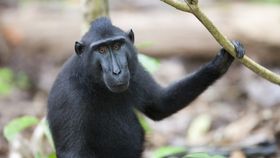


A camera trap set up in the rainforests of Sulawesi has been seeing more than its fair share of action lately, with several of the Indonesian island’s elusive inhabitants giving star performances. The stand-out routine so far was delivered by a critically endangered black crested macaque – a species that is endemic to Sulawesi – which was filmed “chattering” to the camera from ultra close up.
The camera was placed in the Bogani Nani region by the Wildlife Conservation Society (WCS) back in April with the intention of identifying and monitoring the local rare and endemic species, and while researchers were hoping for some intimate shots, even they will admit that this particular scene wasn’t in the script.
In the video, the macaque can be seen examining the lens while rapidly chattering its teeth – a behavior that has previously been associated with a range of communicative functions. For instance, studies have found evidence that teeth chattering plays a key role in macaque social interactions by signaling fondness or submission, among other things.
Exactly what the monkey was attempting to communicate in this particular shot is hard to say, although a statement released by the WCS explains that the behavior is “most likely indicative of a curiosity with the camera.”
The purpose of the camera trap is to help conservationists map the abundance and track the movements of the local wildlife, in order to identify key habitats and areas of activity that are in need of extra protection.
“Our initial results are already providing very exciting insights into Sulawesi’s unexplored rainforests as you can see with these quirky characters showing up in the video traps,” explained Noviar Andayani, who heads up WCS operations in Indonesia.
Other rare species to have been detected by the camera so far include the likes of Sulawesi warty pig, as can be seen in the video below. However, one animal that is yet to make an appearance is the endemic Sulawesi civet, which, despite weighing just 6 kilograms (13.2 pounds), is the island’s top predator.