Health and Medicine
 PUBLISHED


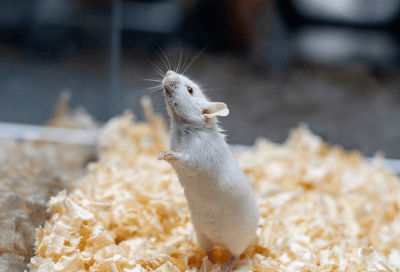


Trauma may be passed down through generations, not just via culture and social interactions, but through DNA itself. Studies have shown that people who lived through war, intense hardship, and starvation can have children with altered physiology who react differently to stress. But it isn't just a broad sense of peril that can be transmitted. Studies have suggested that animals might even be capable of passing on super-specific information about a traumatic experience to their offspring.
In 2013, as detailed in a study published in Nature Neuroscience, scientists at Emory University carried out an experiment in which the offspring of traumatized mice showed fear of a smell they had never encountered, but one that had been used to frighten their parents.
They exposed a group of mice to the chemical acetophenone, which has a sweet, floral scent reminiscent of cherries and orange blossom. It's a pleasant enough smell. However, every time the odour was introduced, the mice were given a mild electric shock. Through habituation, they quickly learned to associate the particular smell with unpleasant sensations.
When startled by a sudden loud noise, a mouse would be significantly more jumpy if that smell was wafting in the air, indicating they were in a heightened state of anxiety. However, the smell did not simply make them more timid overall. When tasked with exploring a maze, the shocked mice and the non-shocked mice behaved in a very similar way, suggesting the experience had not profoundly affected their wider wellbeing.
Most remarkably of all, when the smell-traumatized mice had offspring, the pups behaved in exactly the same way. The researchers found that mothers and fathers can pass on a learned sensitivity to an odor to their descendants. Adoptive mothers, however, could not transmit it to fostered pups, demonstrating that the sensitivity is not passed on through social interaction.
The team went a step further and found that the mice had more space in the smell-processing part of their brains, called the olfactory bulb, devoted to the odor to which they are sensitive.
Furthermore, the DNA from the sperm of smell-sensitized father mice had become altered, likely driving this change. The letter-by-letter sequence of the DNA had not changed, but it had been subtly altered through methylation, which involves the addition of methyl groups to certain bits of DNA.
The researchers showed this was a vivid example of epigenetics, a term meaning "on top of genetics,” which explains how genes can get turned on or off, regardless of the underlying genetic code itself. Although you might think the genetic code is set in stone, certain environmental factors can change how these genes express themselves. This means that environmental stimuli, such as diet or trauma, can switch certain genes on or off like a dimmer switch.
This is, of course, a study in mice, but scientists know that humans can experience similar epigenetic changes. For instance, scientists have studied populations in the Netherlands that experienced famine during World War Two and found their kids, who didn’t directly experience the suffering, had picked up epigenetic changes that later affected their adult health. Studies on pregnant 9/11 survivors have reached similar conclusions, too.
What was particularly surprising about the 2013 mouse study, however, was just how specific those inherited fears could become.
"While the sequence of the gene encoding the receptor that responds to the odor is unchanged, the way that gene is regulated may be affected," Kerry Ressler, study author and professor of psychiatry and behavioural sciences at Emory School of Medicine, said in 2013.
"There is some evidence that some of the generalized effects of diet and hormone changes, as well as trauma, can be transmitted epigenetically. The difference here is that the odor-sensitivity-learning process is affecting the nervous system – and apparently, reproductive cells too – in such a specific way."



 2
2