Space and Physics
 PUBLISHED


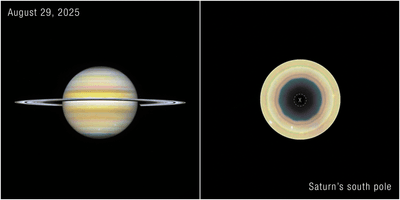


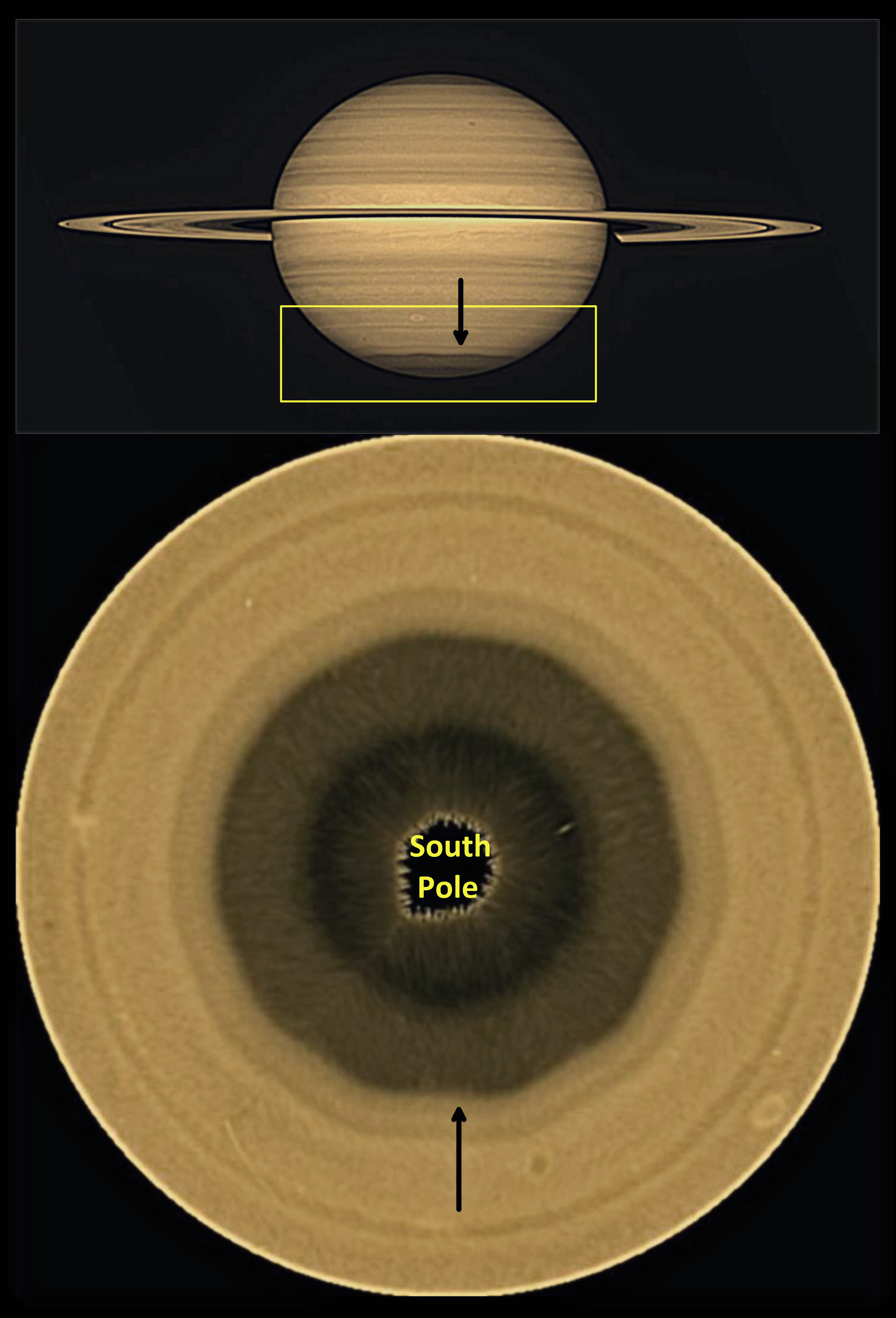
It’s not often amateur astronomers get to collaborate with the Hubble Space Telescope, but together they have captured a wave developing around Saturn’s south pole with 10 even sides and equal angles. The causes are currently unknown, as is why the shapes at the two poles are similar, but not the same.
The Voyager spacecraft revealed the presence of a hexagonal shape at Saturn’s north pole. We don’t know how long it has been there, but more than 40 years later it persists, despite some changes in color, detectable when Saturn’s long seasons turn its northern hemisphere to face us.
A lot of work has gone into trying to explain the hexagon, but perhaps the strangest thing about it is that it doesn’t have a southern counterpart, or at least it didn’t until now.
Saturn’s southern spring
As Saturn’s southern hemisphere faced more sunwards around 2023, amateurs took the chance for another look at the south pole region, hidden from us for a decade. They spotted a shape with four extra sides at latitudes around 58°S to 63°S.
Naturally the Hubble could see the shape more clearly, but its dance card is so full it doesn’t get to check on Saturn often. Amateurs have helped fill in the gaps, tracking changes to the decagon between Hubble observations.
The Hubble detected vertical stratification in Saturn’s clouds composing the decagon, and that some vertices are sharp, while others are quite rounded.
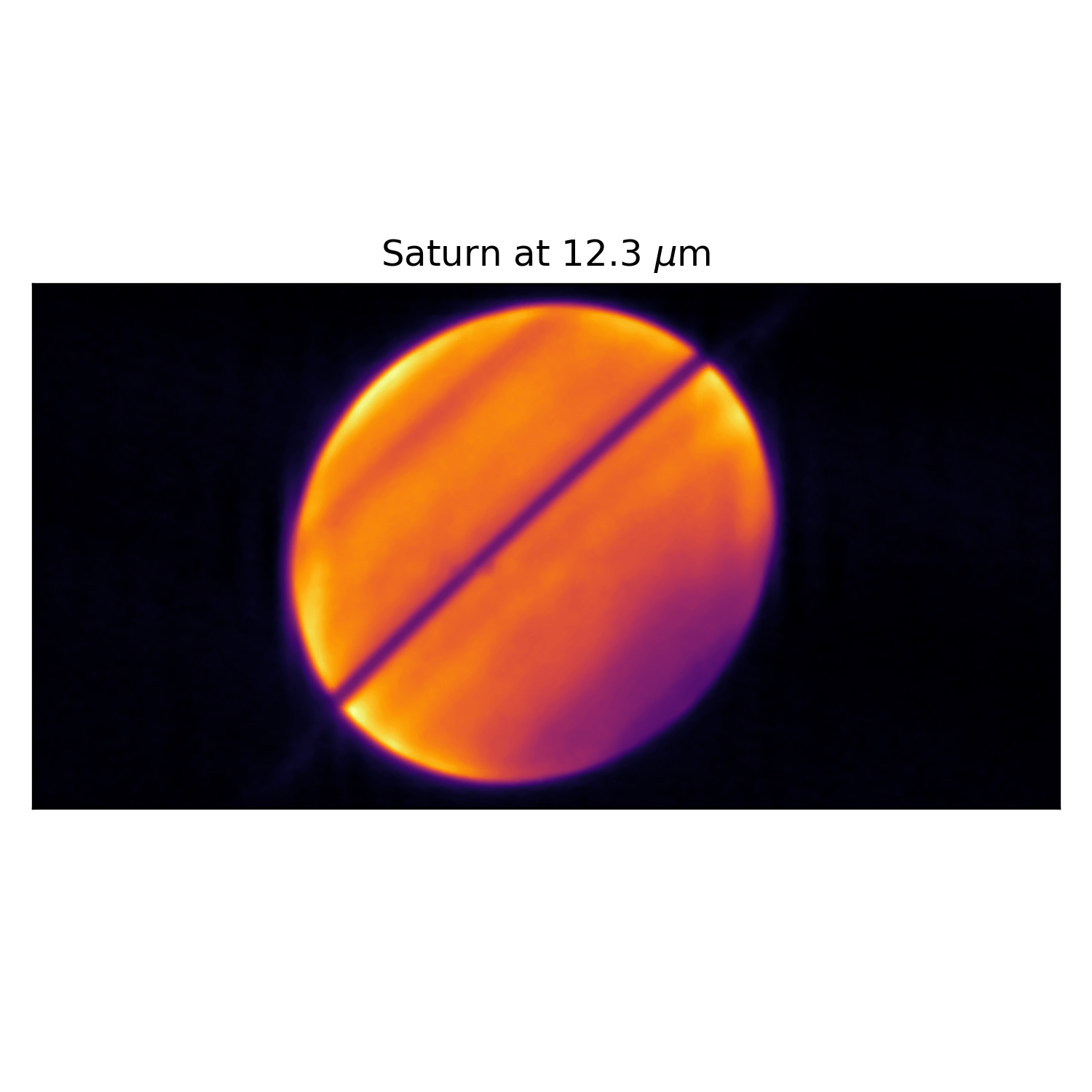
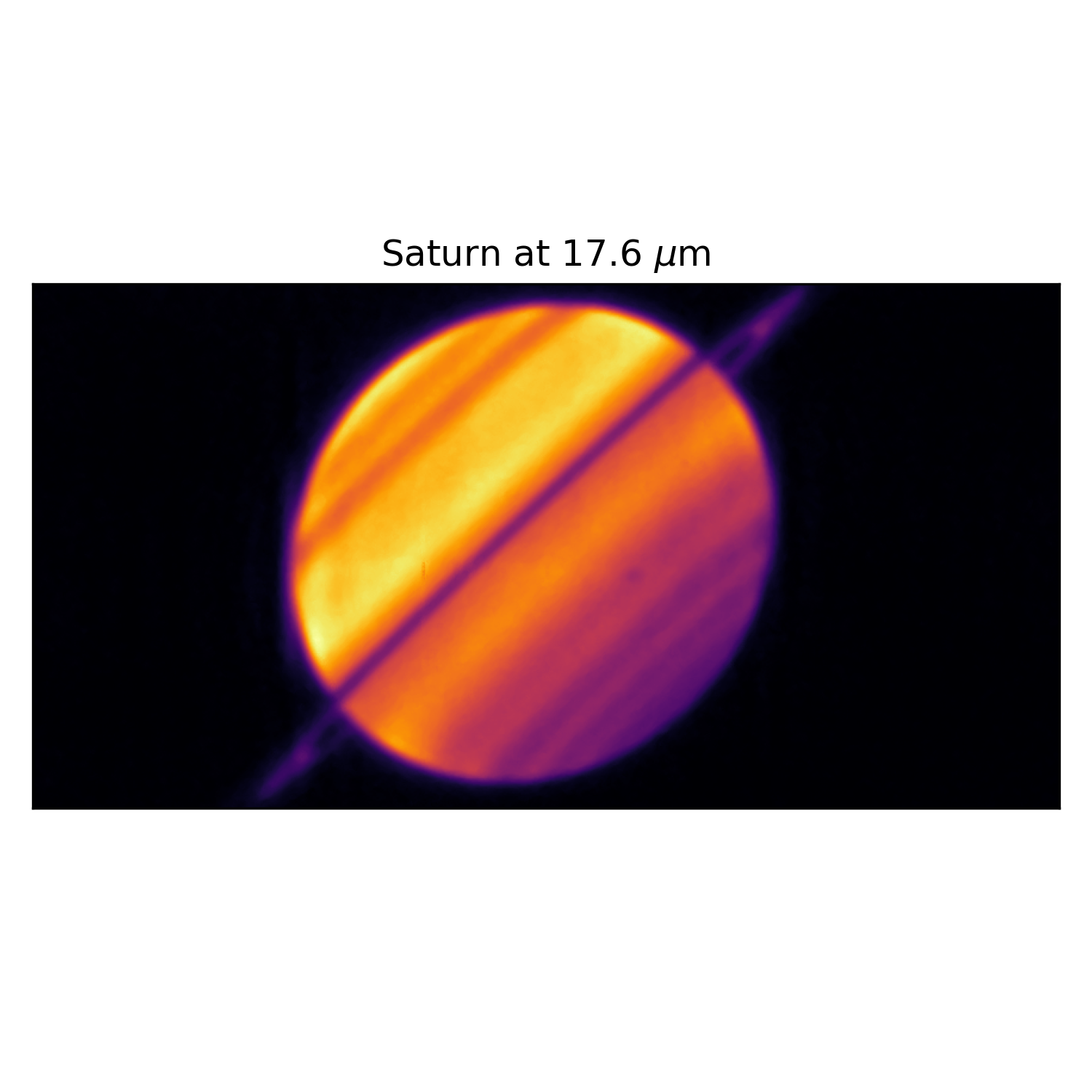
Infrared images can often tell us more than visible light about formations like this, although that’s not something amateurs can help with much. Professor Leigh Fletcher of the University of Leicester used the Very Large Telescope’s (VLT) infrared capability to determine the temperature of the decagonal shape in August 2025.
The VLT images revealed the wind speed decreases with altitude.
"Saturn still has the ability to surprise us - given the season, Saturn’s southern hemisphere is emerging from more than a decade in winter darkness,” Fletcher said in an emailed statement. “Something has clearly changed during that long winter when we weren’t looking, presenting us with this stunning new feature around the South Pole.”
The changing nature of the decagon and variation in its vertices “suggest that the decagon is a wave resulting from a dynamical instability of the jet occurring in the upper weather layer, as it has also been proposed for the hexagon,” the authors write.
Saturn has an axial tilt only 3.3° greater than Earth’s, so we never get a clear look at either pole. Nevertheless, during a hemispheric summer, the pole faces the inner Solar System enough that we can get at least an introduction to events that only a space mission could see in winter.
The images were taken with the VLT’s VISIR instrument, which has now been retired, so we won’t get to see the northern hemisphere in high summer that way, but Fletcher praised its significance.
“VISIR was essential in providing the thermal structure of the atmosphere in the vicinity of the new decagon. These temperatures allow us to determine the stability of the atmosphere, and how the winds change with height - both vital ingredients to understand how the new decagon appears stable over the 2023-25 period.”
Fletcher and co-authors conclude that the jet stream that envelops the decagon has speeds of up to 400 kilometers (240 miles) per hour, much faster than the most powerful earthly hurricane ever recorded.
However, just as cyclone systems migrate far more slowly than the winds whipping around their eyes, the decagon as a whole only moves at around 9 kph (5 mph), relative to the planetary rotation.
Cassini, we miss you
Without a spacecraft in orbit around Saturn, we may not be able to discover additional features, like the hexagonal vortex above the hexagonal wave that complicated attempts to explain the northern hemisphere phenomenon.
“This research raises many fundamental questions about atmospheric phenomena on gas giants,” said Professor Agustín Sánchez-Lavega of Universidad del País Vasco EHU.
“Why is Saturn the only planet to form this type of polygonal waves? Is the phenomenon in any way related to the 5- and 8-sided polygonal arrangement of the cyclones surrounding Jupiter’s poles? Further observations over the coming years, as visibility of the planet’s southern hemisphere gradually improves, will help to characterise it and develop advanced models that will enable us to solve this intriguing atmospheric mystery.”
Without being a able to answer those questions, let alone why they waves at the two poles have different numbers of sides, planetary scientists can’t be confident in predicting future developments.
“The hexagon itself is now hidden from view, as the North Pole disappears into autumn and winter,” Fletcher said. “Who knows whether that will still be there next time we can look? And how long this new decagon will hang around for?”
Nevertheless, the method of obtaining the information might be as significant as what we have learned.
“What’s really exciting about this work is the involvement of amateur observers with their backyard telescopes, sharing their images online, and searching Saturn’s clouds for new discoveries,” Fletcher said. “It was their data that first hinted something exciting was going on.”
The study is published open access in Science Advances