Nature
 PUBLISHED
 2
2


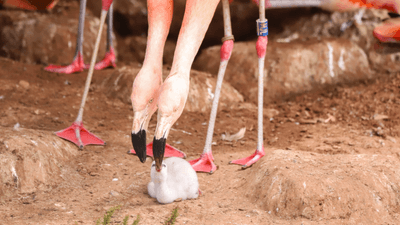


Paignton Zoo in the United Kingdom has welcomed its first Chilean flamingo chicks since 2018, and among the clutch was an egg tended to by a same-sex couple: Curtis and Arthur. The new dads have captured the hearts of many, but it’s by no means the first time this kind of behavior has been seen among birds.
“Regarding the same-sex parenting, we aren’t entirely sure how this has come about, although it is a known phenomenon in Chilean flamingos as well as other bird flocks,” said Paignton Zoo birds curator Derek Smallbones in a statement. “The most likely scenario is that the egg was abandoned by another couple, so this pair have ‘adopted’ it.”
Chilean flamingos typically take around 28 days to finish cooking in their eggs after being laid, in which time both parents – whoever they may be – will sit on top of the mud pile to incubate the offspring. Unlike the vibrant pink, long-legged adults, they come out a little dumpy in the leg department and with fluffy white-gray downy feathers.

This most recent clutch are the stars of Love Lagoon, an initiative inspired by the hit reality TV show Love Island. It provides regular updates on the relationships unfolding between the flamingos at Paignton Zoo, where four chicks have already arrived and more are expected to be on the way.
“We are pleased at the success of this year’s breeding programme so far,” added Smallbones. “It’s a testament to the skill and hard work put in by the Bird Team and we are hopeful that we may see more eggs hatch over the coming days and weeks.”
Flamingos are just one of many birds in which same-sex parenting has been documented. Pairs of male penguins of various species have incubated eggs, hatched and/or raised chicks in zoos all over the place, including gentoos in Australia, Humboldts in England, and African penguins in the Netherlands. There was even a pair of king penguins in Denmark caught chick-napping an abandoned baby.

Same-sex behaviors aren’t limited to parenting, either, and observations of same-sex mating behaviors have been seen across a wide range of species, even if science doesn’t always report on it. Author of A Little Gay Natural History, Josh Davis, told IFLScience in a recent interview that vast swathes of the natural world engage in queer behavior.
“Whilst it has only been officially recorded in around 1,500 species, this figure is likely a massive underestimate. This is because it can be found in pretty much every branch of the evolutionary tree, from beetles and butterflies to turtles and squirrels, so the idea that it is limited to just a few hundred species out of the 2.13 million described to date is incredibly unlikely.”
So cheers to you, Curtis and Arthur. Congrats on your fluffy bundle of joy.