


 Space and Physics
 PUBLISHED


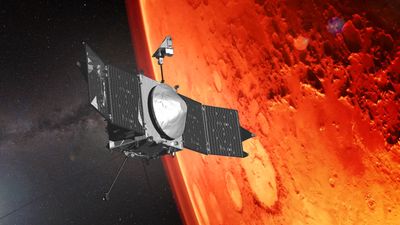


NASA has announced the end of the pioneering MAVEN Mars mission. Nobody had heard from the spacecraft since it experienced an "anomaly" last December as it came from back behind Mars and went into safe mode. Despite many attempts at getting back in touch, none was successful. On June 3, the space agency decided to end the mission.
MAVEN, the Mars Atmosphere and Volatile Evolution, launched in 2013 and studied Mars for 11 years, a decade more than its initial one-year mission. The goal was to study how Mars was losing its atmosphere, and since its arrival around the Red Planet in September 2014, it did that and so much more.
Aurorae and atmosphere loss
The spacecraft showed that the overall rate of atmospheric loss is constant, although it varies as the distance between Mars and the Sun changes over the Martian year. The loss of water in particular, has wild seasonal variations.
The Red Planet has no magnetic field, so the solar wind, the stream of charged particles from the Sun, erodes the atmosphere.
This process is even more intense during solar storms, when more solar plasma is flung towards the planets. The observations spoke to how Mars likely became the frigid desert it is today.
“We saw the effect of a solar storm hit, and when it did, it increased the loss rate by a factor of 10 or 20,” Bruce Jakosky, former principal investigator on the MAVEN mission, told IFLScience in 2015 when those findings were first presented.
“So we think early in Mars’ history, when solar storms were more abundant and more intense, when the solar wind was more intense, the loss rate would have been greater than it is today. That’s the key result we’re focused on.”
There’s something else that is related to solar activity and more intense during solar storms: aurorae. Martian ones are different from the Earth ones. They do not only happen at the poles, like on Earth, and MAVEN was able to spot ultraviolet auroral emission from the dayside of the planet.
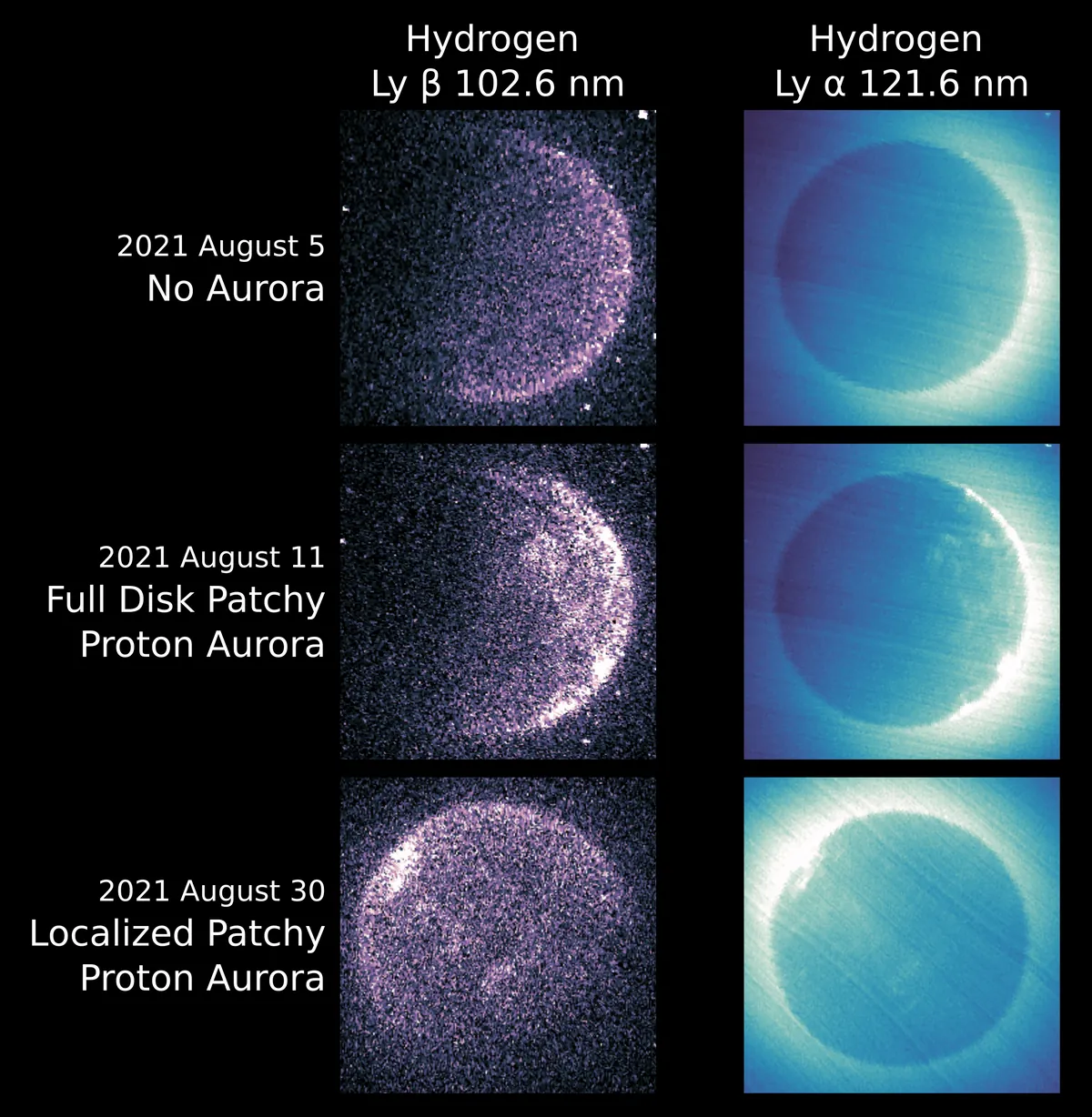
“The MAVEN mission has truly advanced our understanding of the Martian atmosphere and evolution. This dataset has had a tremendous impact on the field,” Shannon Curry, MAVEN’s principal investigator, said in a statement. “Our science team is exceptionally proud of all of these amazing discoveries.
Chasing comets and preparing Earthlings for Mars
Back in 2017, MAVEN reported the first detection of metal ions in Mars's ionosphere. This was the first time we had found such a feature on another planet. More recently, the mission had observed interstellar comet 3I/ATLAS and provided potential detections of lightning on the Martian nightside.
“The science MAVEN has given us is key to informing what kind of radiation protection and safety measures we must take before sending humans to Mars,” added Louise Prockter, director of the Planetary Science Division at NASA Headquarters in Washington. “The data collected from MAVEN will continue to provide valuable insight into Mars for decades to come.”
An "anomaly" and the end
It remains unclear what happened to the spacecraft. On December 4, MAVEN transmitted its last telemetry. It went around the planet, and a fragment of tracking data was sent on December 6. Since then, nothing.
"Telemetry from MAVEN had showed all subsystems working normally before it orbited behind the Red Planet. After the spacecraft emerged from behind Mars, NASA’s Deep Space Network did not observe a signal," NASA explained back in December. NASA’s Curiosity rover on the ground even attempted to look for the spacecraft in the sky, but with no success.
A NASA anomaly review board convened in February to investigate the loss of signal. Today it explained, "A brief fragment of telemetry data from analysis of radio signals recorded by the DSN’s open-loop receivers indicated the spacecraft was in safe mode and rotating at an unusually high rate when it emerged from behind Mars, indicating a disruption in MAVEN’s orbit trajectory."
The review board has determined that this fast rotation caused the spacecraft's batteries to drain and the system lost power, unable to communicate, concluding that it is not recoverable, leading to today's decision.
NASA will reveal more in a press conference today.



 1
1