Health and Medicine
 PUBLISHED


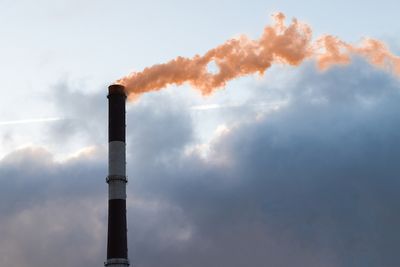


On Tuesday, February 14, the residents of Pima County in Southern Arizona were told to evacuate or take shelter indoors after a truck carrying liquid nitric acid crashed and spilled its contents onto the surrounding road.
The accident took place at around 2:43 pm and involved a commercial truck pulling “2,000 pounds” (~900 kilograms) of nitric acid, which crashed, killing the driver and disrupting the major east-west route that crosses much of the US’s South West.
First responders, including the Tucson Fire Department and Arizona Department of Public Safety, soon evacuated everyone within a half-mile (0.8 kilometers) of the crash and instructed others to stay indoors and to turn off their air conditioning and heaters. Although the “shelter-in-place” order was later lifted, there are expected to be ongoing disruptions on the roads surrounding the crash site as the hazardous chemical is dealt with.
Nitric acid (HNO3) is a colorless and highly corrosive liquid that is found in many common laboratories and is used in various industries such as agriculture, mining, and dye manufacturing. The acid is most often found in the production of fertilizers where it is used to produce ammonium nitrate (NH4NO3) and calcium ammonium nitrate (CAN) for fertilizers. Nearly all nitrogen-based fertilizers are used for feedstocks and so there is a growing demand for them as the global population increases and places a greater need on food production.
These substances are also used as precursors in the production of explosives and are listed for regulated control in many countries due to their potential for misuse – ammonium nitrate was actually the substance responsible for the Beirut explosion in 2020.
Nitric acid is harmful to the environment and toxic to humans. Exposure to the acid, according to the Centers for Disease Control and Prevention (CDC), can cause irritation to the eyes and skin and can lead to various delayed pulmonary issues, such as edema, pneumonitis, and bronchitis. The severity of these issues depends on the dose and duration of exposure.
Footage and photos taken by members of the public show a large orange-yellow cloud billowing into the sky from the site of the Arizona accident. This cloud is produced by nitric acid when it decomposes and produces nitrogen dioxide gas.
The nitric acid spill comes only 11 days after a freight train belonging to Norfolk Southern derailed in Ohio. This event also led to the evacuation of residents as the vinyl chloride carried in five of the rail cars caught fire and sent plumes of toxic hydrogen chloride and phosgene into the atmosphere.