Nature
 PUBLISHED




In the last five years, Europe has suffered some extreme summer droughts. Although the continent’s temperate climate made these far milder than those elsewhere in the world, they were still probably the worst in more than 2,000 years – perhaps much longer.
"We're all aware of the cluster of exceptionally hot and dry summers we've had over the past few years, but we needed precise reconstructions of historical conditions to see how these recent extremes compare to previous years," Professor Ulf Büntgen of Cambridge University said in a statement.
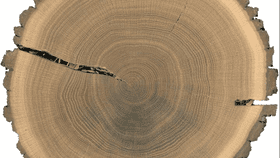
Tree rings’ width can famously be used to determine the quality of past growing seasons, but we can learn even more from what is contained within. In Nature Geoscience, Büntgen and colleagues track summer rainfall in the Czech Republic and south-eastern Germany by independently measuring carbon and oxygen isotope ratios from each tree ring in 147 living and dead oak trees – 27,000 ratios in all. The ratio of light to heavy carbon isotopes in a tree ring is determined by the amount of photosynthesis occurring in the year it was laid down, while oxygen ratios depend on the amount of water stress the tree was experiencing. Combined, these provide a more sophisticated measure of seasonal conditions than ring width alone.
The samples were taken from oak trees both living and dead – the oldest of which dated back 2,110 years, to before Julius Caesar invaded Britain – with each year in that time represented by an average of 7.2 trees.

"Generally, our understanding is worse the further back we go back in time, as datasets looking at past drought conditions are rare," Büntgen said. Although the geographic range was limited, the fact this sample included so many data points from pre-medieval times makes it an important addition to our knowledge of long-term European climate, and the recent years match well with the instrumental record.
Büntgen and co-authors found some extreme examples of dry summers in the region, most matching known records of droughts, which sometimes changed the course of history. Yet 2016-18 were three of the five driest years in that entire time.
"We've seen a sharp drop following centuries of a slow, significant decline, which is particularly alarming for agriculture and forestry," said co-author Professor Mirek Trnka of the CzechGlobe Research Centre. Although the trend in one part of Europe isn’t necessarily indicative of what is happening elsewhere, Trnka noted that "Unprecedented forest dieback across much of central Europe corroborates our results."
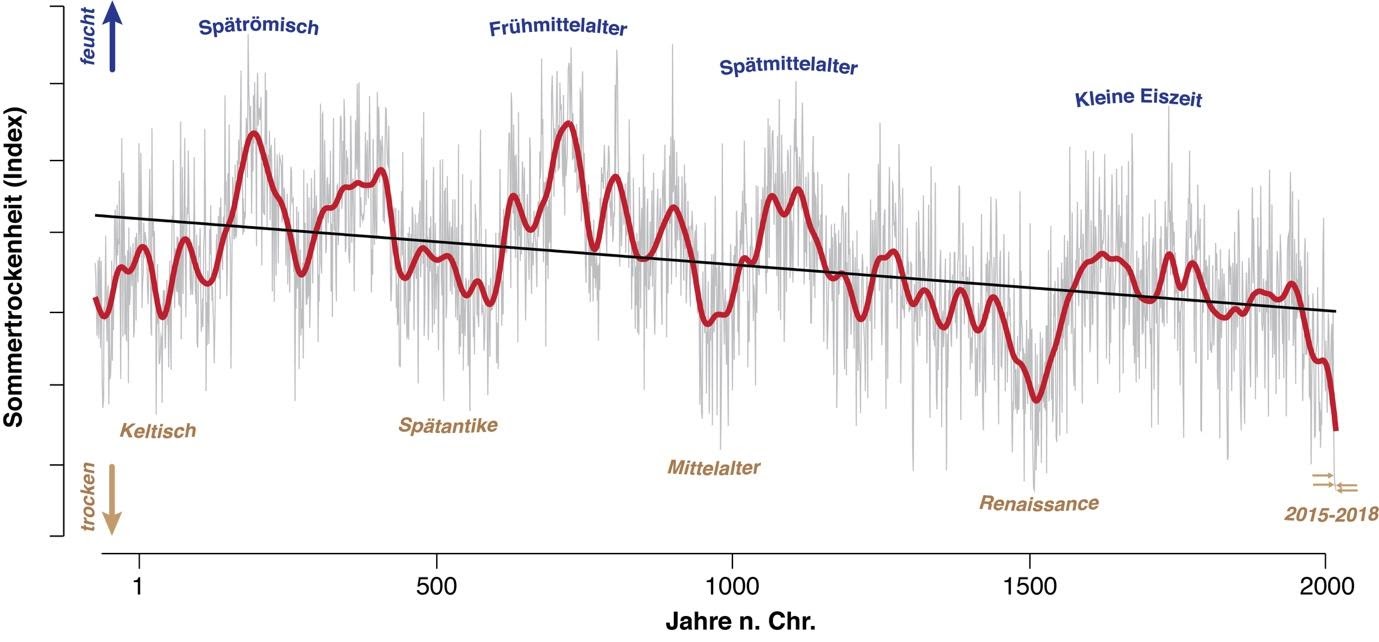
It will be much harder to find out what conditions were like in previous millennia, with most specimens having rotted away. Nevertheless, it’s at least possible that central Europe just suffered its driest series of summers since the last Ice Age.
Büntgen’s findings are yet another sign the world’s recent weather is out of step with the conditions in which civilization has flourished. They come on the heels of evidence the Gulf Stream, whose warm waters keep the climate of Northern Europe comfortable, is now the weakest it has been for more than 1,000 years.
"Climate change does not mean that it will get drier everywhere: some places may get wetter or colder, but extreme conditions will become more frequent, which could be devastating for agriculture, ecosystems and societies as a whole," Büntgen said.


 1
1