Nature
 PUBLISHED
 2
2


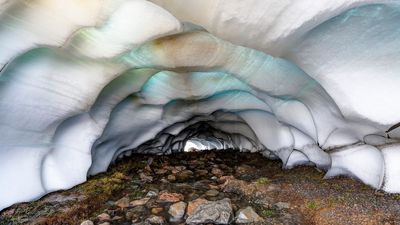


After a stunning photo of a rainbow-colored ice cave inside Mount Rainier went viral, the National Park Service (NPS) put out a stark warning: ice caves may look pretty, but they can be deadly. Nature photographer Mathew Nichols recently snapped the ice caves of Mount Rainier in Washington state (image below). When the sun hits the roof of these ice caves from outside, the light is retracted into the ice cave ceiling, creating a vibrantly colored scene.
“I could not believe my eyes. I went up to Mt Rainier specifically to explore the ice caves and never imagined they would be SO COLORFUL,” the photographer said in an Instagram post.
“I did not enhance the colors at all in the images I will share with you all!! It was really THAT COLORFUL!!”
Understandably, the images went viral and were widely shared on a variety of media platforms. However, as gorgeous as the ice caves may seem, the NPS warns that it's best to steer well clear of them.
“To clarify, the photo is of a melt-water channel running underneath a perennial snowfield (snow that persists through the summer),” the NPS said in a statement.
“Officials strongly discourage visitors from approaching or entering ice caves or melt water channels as they are prone to spontaneous collapse due to melting, which is accelerated this time of year. Collapse, or ice and rock fall could be fatal or cause serious injuries to those who venture inside or near the entrance,” they continued.
They added that would-be explorers are also a risk of developing hypothermia “due to the combination of cold air temperatures inside and colder melt water flowing from the snowfield.”
The NPS notes that Mount Rainier National Park used to have a number of well-known ice caves, but they were forced to close them to the public in the 1980s due to warming temperatures making them unstable. Especially during the warmer months at lower elevations, it has been known for chunks of ice the size of a small car to fall within the caves, sometimes with tragic consequences.
Elsewhere in Washington, collapsing ice caves have previously proved deadly. In July 2015, a person was killed and five other people were injured after an ice cave partially collapsed in Mount Baker-Snoqualmie National Forest near Seattle.
Another accident occurred at the same caves in 2010 when an 11-year-old girl was killed by a falling piece of ice.
Considering the US has just gone through a particularly sweltering summer, it's safe to assume that these ice caves might be even riskier than usual.