Space and Physics
 PUBLISHED





NASA’s Psyche spacecraft has now got the right speed and right inclination to reach asteroid Psyche in summer 2029. And it owes it all to Mars. The probe flew by the Red Planet on May 15 at a distance of just 4,609 kilometers (2,864 miles) from the surface. And got a big boost.
“We’ve confirmed that Mars gave the spacecraft a 1,000 mile‑per‑hour boost and shifted its orbital plane by about 1 degree relative to the Sun. We are now on course for arrival at the asteroid Psyche in summer 2029,” Don Han, Psyche’s navigation lead at NASA’s Jet Propulsion Laboratory, said in a statement.
The mission delivered a different view of the planet, something we don't usually get. It approached Mars from its night side, producing crescent views of the planet and its surroundings, before seeing a nearly full Mars as it flew past.
Psyche took thousands of images as well as using all its other instruments. This is both a test to make sure everything is working fine and also an opportunity to conduct intriguing science. One goal was to look for a dusty ring around Mars.
This is related to the two moons of Mars, Phobos and Deimos, but is different from the future ring that may form when Mars rips Phobos apart (which may happen sooner than we thought). It is believed to be created by micrometeorites impacting the two moons, releasing dust into circumplanetary space.
Another goal was to look for moonlets around Mars, maybe a small captured asteroid that we might have missed, or a fragment of Phobos or Deimos. Psyche will also be doing this kind of search around its namesake asteroid once it arrives there.
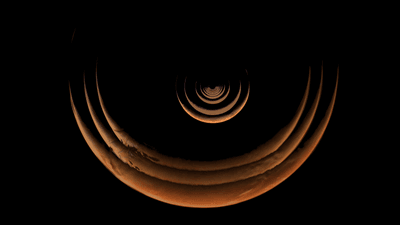
Beyond the beautiful timelapse image, there are more views that have been shared with the public. These include a color-enhanced photo of the double-ringed crater Hyugens, taken right after closest approach.
.png "a large double ringed crater surrounded by many other craters in a particularly interesting area of mars.")
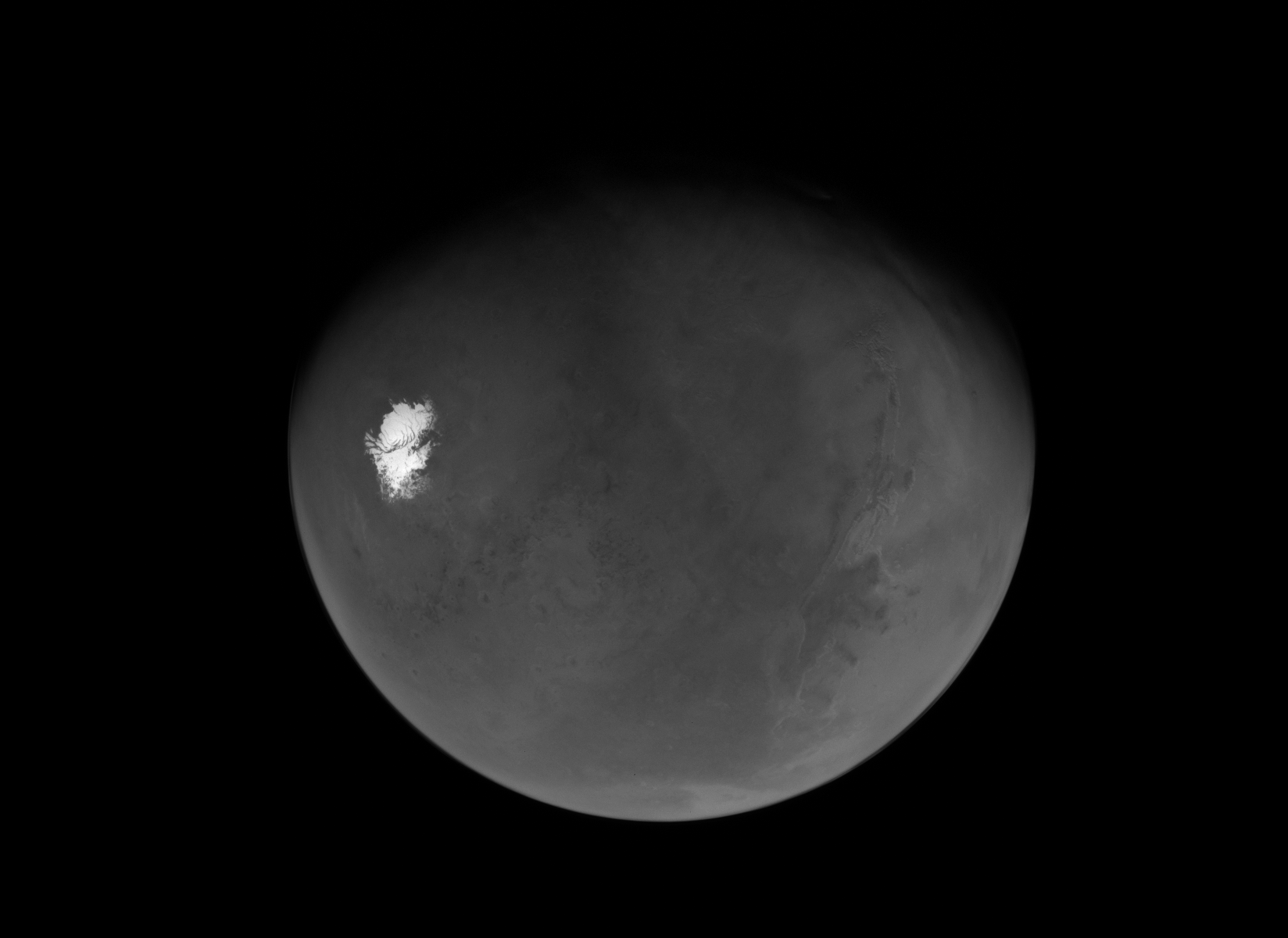
The nearly "full Mars" view places the planet on its side with the south pole on end and the rift valley known as Valles Marineris visible to the right.
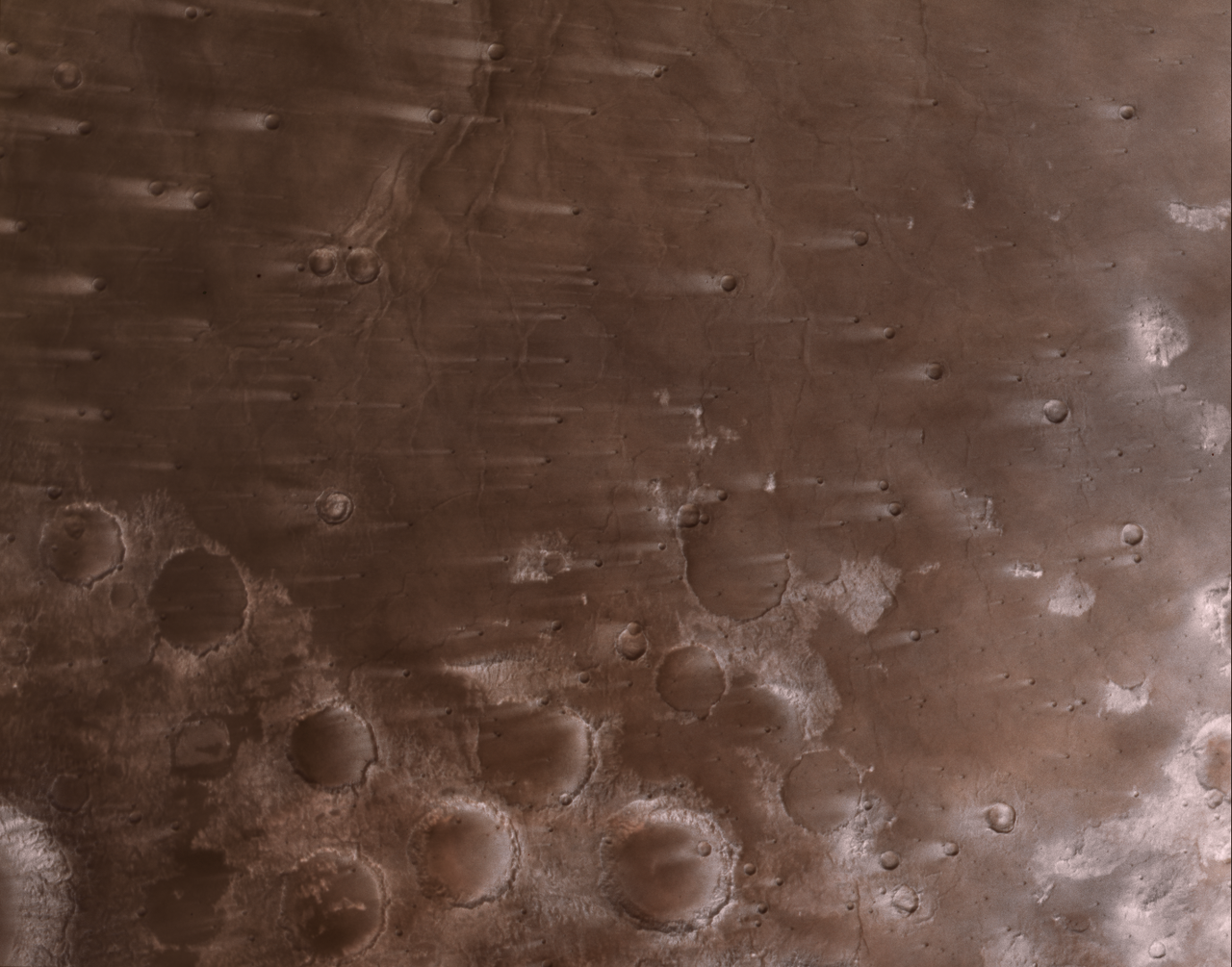
The effects of wind on the craters of the Sirtis region are also pretty spectacular. Some of the windstreaks are about 50 kilometers (30 miles) long, as big as the biggest craters in the image below.
In total, the Psyche spacecraft will travel 3.5 billion kilometers (2.2 billion miles) to reach asteroid Psyche, on a spiral orbit that will place it efficiently around the peculiar object.
Psyche (the asteroid) is often called the most expensive known asteroid because it is a metallic and silicate asteroid, and maybe up to 60 percent of it is metal by volume.
It was originally thought that Psyche was the metallic core of a planet that was broken apart in a collision. But its origin could be more mysterious than that, and solving it is one of the primary goals of the mission.