


 Nature
 PUBLISHED


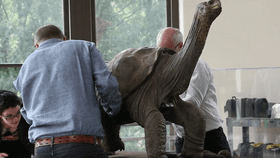


The tortoise, the legend. After five long years, "Lonesome George" has returned to his native home on the Galapagos Islands (albeit in a stuffed and preserved taxidermied form).
Lonesome George became quite the celebrity towards the end of his 100-odd years of life as he was the last remaining individual from the giant Pinta Island tortoise species. After passing away in 2012, his earthly remains were sent to a team of expert taxidermists in New York at the American Museum of Natural History, where he was primed, polished, and preserved.
You can even watch a short documentary from 2015 about the fine art of preserving Lonesome George in the video below.
The taxidermied remains of this odd-looking fella was on display at the Museum from September 2014 until January 2015. After some initial delays, he’s now headed home. The body was flown to Ecuador and then the Galapagos on Friday, February 17, where it will be on public display in the islands’ Symbol of Hope Exhibition Hall next week.
Lonesome George – who was regularly dubbed the “rarest creature in the world” – remains a powerful symbol of conservation. After conservationists realized he was the last known individual of his species they launched numerous efforts over the decades to breed him with females of a similar species, sadly to no avail.
Advances in science, however, hint that the days of the Pinta Island tortoise might not have ended just yet. Over the past few years, there have been numerous snippets of speculation that it might be possible to resurrect Lonesome George, provided researchers can find a genetically similar species.
For the time being, George remains as lonesome as ever on the Galapagos. But with a little hard work, perhaps his story could continue.



 1
1