Nature
 PUBLISHED




Prehistoric Planet is back for a second season on Apple TV+ as narrator David Attenborough and producers Jon Favreau, Mike Gunton, and Tim Walker take you back in time to enjoy life as it was 66 million years ago. Our jaunt through the Cretaceous will take place as a five-day viewing event that showcases dinosaurs, reptiles and even mammals – from the babies to the behemoths – including new species and habitats.
Combining award-winning wildlife filmmaking with the latest scoops in palaeontology and the wizardry being performed by animators at MPC, it’s harder than ever to keep track of where you currently are in Earth’s history as you root for baby Isisaurs, gasp at predatory Mososaurs, and well up at the remarkably touching courtship display of horrifyingly massive Pterosaurs.
Season two brings with it a particularly arresting underwater episode that follows the lifecycle of ammonites – arguably the fossil most people are familiar with in its chalky, unanimated form – and the swimming paperclip of the Cretaceous, Diplomoceras maximum, a creature that could live for 200 years.
Executive Producer Mike Gunton told IFLScience that the series builds on its debut with greater attention paid to the backing tracks and minute details that bring the photorealistic visual effects to life. Sand delicately tumbles from the angular features of enormous predators, meanwhile, one animator’s efforts thrashing about in the dirt makes it really look as though two dinosaurs are battling it out among the dust.
We caught up with Gunton and Series Producer Tim Walker to find out more about what went into season 2, as well as the science that inspired it.
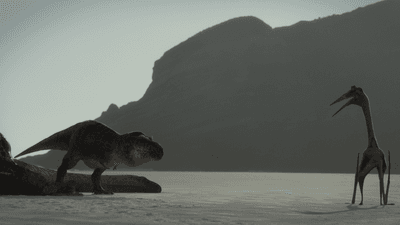
While Prehistoric Planet is famous for showing extinct animals in ways we’re not used to thinking of them (read: cute, fluffy, and vulnerable), there’s a suitably epic showdown between two of its greatest predators to satisfy the thrill seekers. Suffice to say, T. rex up against two Quetzalcoatlus – the world’s largest ever flying creatures with a 10- to 12-meter (33- to 40-foot) wingspan – is an unforgettable sight.
Want to see it for yourself? Prehistoric Planet Season 2 streams on Apple TV+ from May 22nd with a new episode released daily across five days.