Nature
 PUBLISHED
 2
2


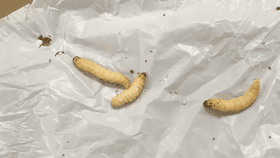


Plastic-munching caterpillars could help the planet worm its way out of its plastic pollution woes.
Scientists have discovered that the larvae of the greater wax moth (Galleria mellonella) possess the remarkable ability to eat and break down polyethylene, a type of plastic used in shopping bags, food containers, and other packaging. Reported in the journal Proceedings of the Royal Society B, researchers from Brandon University (BU) found the "very hungry caterpillar" was even able to survive on a diet of solely plastic for more than a year.
In the wild, this species will sneak into beehives and consume the beeswax that forms the honeycomb. As it turns out, polyethylene is also made out of similarly structured hydrocarbon chains, allowing them to also consume plastic.
"We have done a few trials with other plastics and they seem to indicate that polyethylene is not the only plastic we can feed them," Dr Christophe LeMoine, study author from BU's Department of Biology, told IFLScience.
For the study, the researchers showed this ability is all thanks to a specific species of bacteria that live in the gut of the larvae. The only by-product that’s produced by their plastic degradation is a form of alcohol called glycol.
“Plastic-eating bacteria are known, but in isolation they degrade plastics at a very slow rate,” added Dr LeMoine in a statement. “Likewise, when we treated the caterpillars with antibiotics to reduce their gut bacteria, they were not able to degrade the plastic as easily. So it seems that there is a synergy between the bacteria and their waxworm hosts that accelerates plastic degradation.”
Although scientists have previously toyed with the idea of using plastic-eating bacteria or fungi, these microscopic "plastivores" are pretty slow at their job. On the other hand, the greater wax moth larvae are greedy and speedy eaters. The study found that just 60 waxworms can eat more than 30 square centimeters (4.6 square inches) of a plastic bag in less than a week. While neither the waxworms nor bacteria will solve all of the planet’s pollution, the researchers believe they could be utilized to help curtail the problem.
“Worms that eat our plastic waste and turn it into alcohol sounds too good to be true. And in a way it is,” said Dr Bryan Cassone, another of the study’s authors. “The problem of plastic pollution is too large to simply throw worms at. But if we can better understand how the bacteria works together with the worm and what kind of conditions cause it to flourish, perhaps this information can be used to design better tools to eliminate plastics and microplastics from our environment.”
Meanwhile, plastic pollution continues to mount. If left unchecked, it's estimated that plastic trash in the ocean will outweigh fish by 2050.