Nature
 PUBLISHED



On an expedition to collect amphibian larval specimens from fast-flowing streams, explorers deep in the remote jungles of Sumatra inadvertently discovered two new species of frogs with a unique adaptation to their environment.
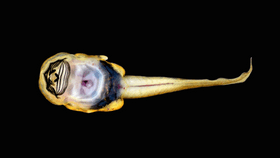
Whereas most tadpoles have a small mouth called an oral disc, the tadpoles of the newly named Sumaterana montana and Sumaterana dabulescens frogs have suction-like cups on their bellies below their mouths. Researchers think it could give them a competitive edge in their fast-paced environment.
"This phenomenon where tadpoles display 'belly suckers' is known as gastromyzophory and, albeit not unheard of, is a rare adaptation that is only found in certain toads in the Americas and frogs in Asia," explains lead author Umilaela Arifin in a statement.
Scientists say more research is needed, but they suspect the belly suckers give pollywogs the ability to stick to surfaces in rapid water. The modified abdomen is only presented in the larval stage, giving the developing buggers exclusive access to a buffet of foods such as algae, whereas competing organisms might simply be washed downstream.

The Sumatran cascade frog Sumaterana crassiovis in its natural habitat. Umilaela Arifin
Molecular and morphological data determined that the amphibians' evolutionary makeup was so distinct that it warranted the creation of a new genus, reidentifying the formerly known Sumatran frog Chalcorana crassiovis to the new Sumaterana genus.
"We decided to call the new genus Sumaterana after Sumatra, to reflect the fact that these new species, with their rare evolutionary adaptation are endemic to Sumatra's rainforests and, in a sense, are emblematic of the exceptional diversity of animals and plants on the island," says co-author Dr Utpal Smart. "Tragically, all of them are in peril today, given the current rate of deforestation."
Sumatra is one of more than 17,000 islands that make up Indonesia’s megadiverse ecosystem. Smack-dab between Australia and Asia, the country is home to 16 percent of the world’s amphibian and reptile species. Naturally, biodiversity scientists are fascinated by the island. The authors say more taxonomic work is needed to further investigate the islands' herpetofaunal diversity.
The findings were published in the journal Zoosystemics and Evolution.