Nature
 PUBLISHED
 1
1

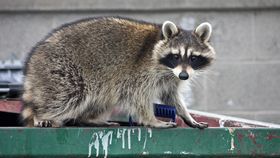


What do raccoons, rats, and crows all have in common? They are all highly intelligent creatures. They are also some of the city's biggest mischief-makers. And that might be no coincidence.
A new study published in the journal Animal Behavior examined whether or not ingenuity and behavioral flexibility help species cohabit with people in dense urban sprawls – and whether these traits put them in more conflict with humans, paradoxically threatening their survival as they are increasingly come to be seen as nuisances or, even, pests.
The short answer: apparently, yes.
Even more startlingly, city residents may unknowingly be involved in some sort of "arms race" with their four-footed and avian neighbors as they become more and more adept at urban living and learn how to overcome animal deterrents.
"Animals that innovate novel ways to solve problems in their environment could drive a type of arms race with humans, where animals and humans work continuously to outsmart one another," co-author Lauren Stanton, a PhD student at the University of Wyoming's Animal Behavior and Cognition Lab, said in a statement.
Where we have invented "animal-proof" trash bins, raccoons and kea have learned how to open said trash bins. And where we have invented electric fences, elephants have learned how to disable them. Elsewhere, monkeys are mastering the art of pickpocketing, rats are dump-diving, and birds are stealing food straight out of our hands.
For the study, the team at Wyoming University looked at different types of cognitive abilities (think: learning, memory, behavioral flexibility, and problem-solving) and comparing them to antisocial behavior (think: killing livestock, damaging property, transmitting disease, stealing food, and hurting humans).
They then considered various personality types and how they affected an animal's willingness to approach urban environments. A curious and bold disposition, for example, might make an animal more risk-inclined and, therefore, more likely to approach humans or human property.
Take one winged city dweller: the crow. Their impressive memory allows them to predict when and where to find food, for example by memorizing a trash collection timetable. Their boldness might prompt them to go out and seek food in busy areas. And their littering, gathering, and card-stealing behavior might put them in conflict with humans. (Alternatively, their smarts could be put to good use, as one Dutch company hopes.)
In contrast, less daring animals like the coyote may minimize interaction with humans and seek out food at night. This seems to be a common tactic with recent research suggesting more and more animals are becoming nocturnal in their habits – and humans are to blame.
"Given increasing human populations and expansion into animal habitat, there is a greater likelihood for human-wildlife conflict," Benson-Amram added.
"Our work illustrates the need for research on a greater number of cognitive abilities in diverse species to understand how we can best mitigate these conflicts."
In the meantime, check out this cheeky monkey stealing a pair of specs.