Nature
 PUBLISHED


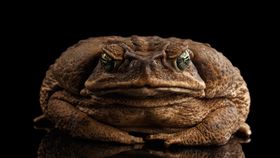


The Australian prime minister’s award for science has been awarded to University of Sydney biologist Rick Shine, who has been helping to protect the country’s wildlife from poisonous cane toads using sausages containing small, non-lethal amounts of meat from the deadly amphibians.
Cane toads, which are native to Central and South America, were introduced to Australia in 1935 in an attempt to control populations of cane beetles in Queensland’s sugar plantations. Unfortunately, the experiment backfired spectacularly, as the toads reproduced at a rate of knots, spreading across much of the country.
Many predatory reptiles and mammals have since died as a result of eating these toads, which now pose a considerable threat to the survival of several native species.
In an effort to save Australia’s wildlife, Shine devised an experiment in which free-ranging varanid lizards were fed small cane toads that weren’t big enough to kill them but were potent enough to make them ill. This helped the lizards wise up to the dangers of eating toads, with the result being that they avoided them in the wild and therefore outlived other lizards that hadn’t been “trained” in this way.
Shine saw similar results when feeding cane toad sausages to quolls and goannas, which also learned not to eat large toads after suffering the effects of a non-lethal dose of poison. These sausages were thrown from helicopters in order to allow wild animals to access them and learn a painful yet life-saving lesson.
Shine’s research has also revealed how livestock farming aids the spread of cane toads, which take advantage of moist cowpats to remain hydrated in dry regions. Anticipating their advance across the landscape to continue, he now plans to introduce small toads to areas that have not yet been exposed to them, so that wildlife can learn to avoid larger toads before they arrive.
Speaking to The Guardian, Shine explained that “we’ve shown that if you put small toads in instead, the predators learn instead of being killed. So they survive the cane toad onslaught.”
(H/T: The Guardian)


 1
1