Nature
 PUBLISHED


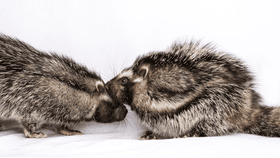


A new study published in the journal Mammalogy describes a bizarre rat that lives in Africa and is the only known mammal to gather up plant poison as a means of chemical defense. Despite its deadly secret weapon, the African crested rat (Lophiomys imhausi) doesn’t exactly look like a killer, resembling something between a pom-pom and a skunk, and it doesn't act like one either, which is lucky considering they coat themselves in toxins so lethal it would only take a few milligrams to kill a human.
While the paper is new, residents in East Africa have long suspected that the rats were armed and dangerous. Back in 2011, an initial study into the unusual features of crested rats suggested they gathered toxins from the poison arrow tree (Acokanthera schimperi), which has been used by humans for hunting as it’s rich in highly toxic cardenolides. When threatened, these rats erect a crest of hair along their back and so it was hypothesized they weaponized this by chewing on the Acokanthera bark and licking the toxins onto the crest hairs. This early research confirmed the behavior in one individual, but how widespread the behavior was among crested rats remained unclear

To find out if packing poison was common, the new research trapped 25 African crested rats to gather the largest sample size ever studied. After reviewing almost 1,000 hours of footage, the authors discovered that collecting Acokanthera toxin was common and that the social lives of these unusual animals were highly complex.
"We put these two rats together in the enclosure and they started purring and grooming each other,” said Sara Weinstein, lead author and Smithsonian-Mpala postdoctoral fellow and postdoctoral researcher at the University of Utah, in a statement. “Which was a big surprise, since everyone we talked to thought that they were solitary. I realized that we had a chance to study their social interactions."
They gutted a disused shed to set up a mini habitat and watched their captive rats, who, as it turned out, are “essentially rat-shaped little cows,” to use Weinstein’s words. Despite carrying deadly poison, they are peaceful herbivores who spend most of their time eating, only breaking to mate, groom each other or climb up walls to reach their nests. They also appear to be monogamous and share many traits seen in other monogamous animals such as large size, long life expectancy, and a slow reproductive rate. When paired, crested rats spent more than half their time touching each other and were constantly on each other’s tail plodding around the enclosure.
"It's considered a 'black box' of a rodent," said Weinstein. "We initially wanted to confirm the toxin sequestration behavior was real and along the way discovered something completely unknown about social behavior. Our findings have conservation implications for this mysterious and elusive rat."