Nature
 PUBLISHED


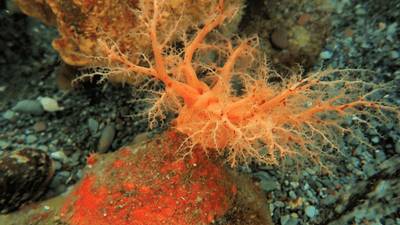


The sea cucumber Psolus fabricii has just demonstrated an unprecedented degree of tissue immortality, to the surprise of scientists. When parts of its tissue were cut off, they kept on living independently, healing wounds, reorganizing cells, and even taking up nutrients – no mouth or digestive system required.
For a human, it would be ridiculous to imagine that a severed body part could go on living without us for several years. For at least one species of sea cucumber, that’s a reality.
They restructured their tissues in a way that seemed to serve them better in their new state.
Sara Jobson
Yes, meet P. fabricii. Scientists recently discovered that if you cut off small pieces of its tissue – they don’t die. In fact, the self-healing fragments were able to keep on living independently for over three years.
Tissue regeneration and "immortality"
You might be familiar with the lizards that can drop their tails when under attack. This is even weirder than that because once a lizard’s tail is gone – it’s done for.
For the sea cucumber, its severed body parts healed their wounds, recognized their cells, showed immune activity, and kept producing new cells. Without nutrients from the body, they seemed to be able to absorb dissolved nutrients directly from seawater without the need for a mouth or digestive system.
According to study author Sara Jobson of Memorial University of Newfoundland, Canada, this level of resilience in explanted tissues is incredibly unusual. As she told IFLScience, “Not only are these tissues absorbing and processing their own internal reserves but they are maintaining other essential processes like cell proliferation and an immune system.”
“Additionally, they restructured their tissues in a way that seemed to serve them better in their new state! It is somewhat mystifying to see tissue ‘blobs’ that are healing and regenerating, not to reform as a full sea cucumber, but to survive as a new biological unit!”
Losing your head
Regeneration is a known talent among sea cucumbers. Some species wield their entire digestive system as a weapon only to wriggle off and grow a new one. Others can jettison their heads and grow a brand-new body. But until now we have assumed that discarded tissues would just die.
We aren't completely sure why explants from this species show unparalleled healing and survival success.
Sara Jobson
Not so, says the epidermal, connective, neural, and muscle tissue of P. fabricii. When similar experiments were carried out on related species, none of them showed the same kind of survival as this species’ tissues suggesting the degree of tissue immortality is at least unusual if not unique.
“While we aren't completely sure why explants from this species show unparalleled healing and survival success, it is likely that P. fabricii employs a suite of tools to facilitate this,” said Jobson. “For example, it is possible that these tissues contain biosynthetic compounds that prevent bacterial invasion.”
Moving on
The findings are remarkable on their own, but they also represent a significant shift in our understanding of tissue immortality. Furthermore, we could be looking at a new class of experimental model that negates the need for animal testing by instead borrowing just a bit that can go on living for years.
You’ve got to admit, the lizard tail trick is looking a little lame now.
The study is published in the journal Science Advances.