Nature
 PUBLISHED
 17
17


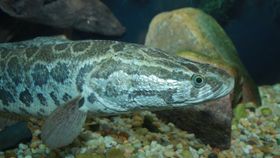


The Department of Natural Resources of the US state of Georgia has announced that for the first time a northern snakehead, a non-native species of fish that has already successfully invaded 14 other states, has been busted in Georgia waters for the first time.
The Northern snakehead is a famously invasive species in the US, a top predator, and is particularly damaging to native species because it can outcompete and outbreed them. It can grow up to over 3 feet (1 meter), and females can lay up to 100,000 eggs in a year over multiple spawning events. But the most salient characteristic is that it is a facultative air breather – it can breathe both underwater and regular air – so it can survive on land for several days, which may also contribute to its success.
Back in 2002, it sparked a national debate about how to deal with non-native species taking over after the infamous snakehead fish incident of Crofton, Maryland. After two ponds were found infested with six adults they were both liberally doused with pesticides and all the fish (and over 1,000 young) were destroyed. This incident, in turn, went on to inspire at least three monster movies: Snakehead Terror, Frankenfish, and Swarm of the Snakehead, plus the NatGeo classic, Fishzilla: Snakehead Invasion.
It was first reported in Georgia after two juveniles were found in a pond located on private property in Gwinnett Country, not far from Atlanta. An angler reported the animals to the Wildlife Resources Division of the Department of Natural Resources.
“Our first line of defense in the fight against aquatic invasive species, such as the northern snakehead, are our anglers,” Matt Thomas, Chief of Fisheries for the Wildlife Resources Division, said in a statement. “Thanks to the quick report by an angler, our staff was able to investigate and confirm the presence of this species in this water body. We are now taking steps to determine if they have spread from this water body and, hopefully, keep it from spreading to other Georgia waters.”
The statement also asks people, especially anglers, to learn to recognize the freshwater fish. And if you do encounter this invasive beastie, their advice is to "Kill it immediately (remember, it can survive on land) and freeze it." Then make a note of where it was found and alert the authorities. It is against the law to import, sell, transfer and own this species without a valid wild animal license.
Northern snakeheads are native to parts of Asia such as Russia, China, and the Korean Peninsula. The animal spread to the United States through unauthorized release and scientists have reported the presence of reproductive populations in Florida, Hawaii, Virginia, and New York.
The fish prefers stagnant water like ponds and is mainly a fish-eater but it can also eat amphibians, crustaceans, and other invertebrates.
[H/T: Vice]