Nature
 PUBLISHED


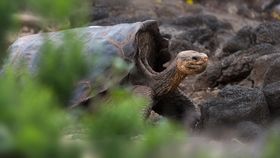


After growing up in the safe haven of responsible captivity, a group of 36 endangered giant tortoises (Chelonoidis chatamensis) are finally graduating to their ancestral homeland, the Galápagos islands. Also known as San Cristóbal tortoises, they were set loose to run free within the Galápagos National Park, which sits on the northeastern side of San Cristóbal island.
There were once 15 species of giant tortoise endemic to the Galápagos Islands, but when the region was colonized in the late 1800s the whalers and pirates brought with them a cast of invasive pests that outcompeted the tortoises for food and ate their hatchlings. Their numbers plummeted and several species were lost. Charles Darwin himself wrote about the harvesting of a species of tortoise found only on Floreana Island (Chelonoidis elephantopus), which was wiped out in 1850, 15 years after his first visit to the Galápagos. Others were thought to be lost but reemerged decades later as hybrids of two species.
With the support of conservationists, there is now an estimated population of 6,700 giant tortoises roaming free on the Galápagos. The comparatively newborn bunch — Lonesome George lived to be 100 — are between six and eight years old and weigh just 5 kilograms (11 pounds) with hopes they’ll one day grow to a hefty 250 kilograms (550 pounds) as adults.
“Rearing young tortoises in captivity to approximately 5 years of age prior to releasing them into the wild is a vital tool in rebuilding population numbers quickly,” writes the Galápagos Conservancy on their website. “Tortoise mortality in the wild is highest over the first couple of years, often due to lack of food or water as well as tortoise hatchlings being easy prey for both endemic and invasive predators. Once a tortoise reaches five years old, it is more likely to survive to maturity."
Captive rearing of tortoises has been used in Galpágos since the mid-1960s to help restore populations of nine of the 11 surviving species, making it one of the most successful conservation programs throughout the Galápagos.
On the theme of positive tortoise news, one of C. chatamensis cousins, Chelonoidis hoodensis, was rescued from the brink of extinction by one tortoises’ exemplary efforts. Diego the tortoise, hailed by many as the savior of his species, was returned to his home in the Galápagos islands last year nearly 80 years after being taken from it. As part of a conservation program, he sired hundreds of tortoises, helping to bring the population up from a mere handful of reptiles to around 2,000 over the past few decades. Top effort, Diego.