


 Nature
 PUBLISHED


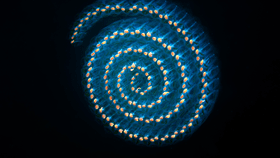


Life is never without obstacles, some you can see from a mile off (like a giant, sideways freighter) while others sneak up on you. It’s perhaps even harder to see a problem approaching when it’s made up of translucent, near-featureless ocean blobs, known to science as salps. These alien-like organisms (whose parasites literally inspired Alien) are part of the reason turtles unwittingly swallow plastic bags, as they resemble an adrift shred of translucent plastic. You might be surprised to hear, then, that these see-through deep-sea jelly balls have brought to a halt not just one but two nuclear power reactors in South Korea this week – not even for the first time this month.
The carnage is unfolding in South Korea at the Korea Hydro & Nuclear Power Company, whose Hanul No. 1 and 2 reactors have been taken offline due to sea slaps clogging the cooling systems. The same unfortunate clash brought the two reactors – which each have a capacity of 950-megawatts – offline for almost a week at the end of March.
Much like the Ever Given’s extended stay in the Suez Canal, the salp blockages become more expensive with each day they remain, well, blocked. According to a report from Bloomberg, the holdup has caused a loss of power equivalent to $21.8 million worth of liquefied natural gas, amounting to around 60,000 tons – a volume that continues to grow while the reactors remain offline.
A sea salp on its own might not seem like much of a force – but, like apes, salps together strong. These tunicates have a bizarre reproduction strategy that can see a single salp start up a cloning factory within itself, producing scores and scores of clones that are genetically (but not necessarily physically) identical. A single salp in the cooling system might not be such a bother, but a whole spine of the critters is a very different issue. Weirdly, despite looking a lot like jellyfish, salps are actually more closely related to humans, and we even share some embryonic structures with these animals before specializing in two very different directions.

Sea salp populations in the region of South Korea’s nuclear power plants usually spike in June, but (as happened for Japan’s cherry blossoms) salpageddon can be triggered early by unseasonably warm currents. “We can’t say yet if the surge in salps is due to the changing climate or other factors,” said Youn Seok-hyun, a research scientist at National Institute of Fisheries Science to Bloomberg. “It should be regarded as a temporary phenomenon unless we see a continuous increase over the next decade.”
[H/T: Futurism]

 1
1