Nature
 PUBLISHED


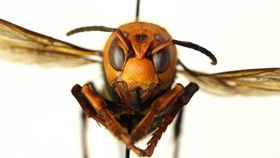


Uh oh — the “murder hornets” are back in town. For the first time this year, a live Asian giant hornet has been spotted in the state of Washington, according to the Washington State Department of Agriculture (WSDA).
The Asian giant hornet was photographed on August 11 in a rural area east of Blaine, just over 3 kilometers (~2 miles) from the site of a huge murder hornet nest that was eradicated back in October last year, not far from the Canadian border. Bug experts from the WSDA reviewed the photograph (below) and confirmed that it showed an Asian giant hornet angrily attacking a paper wasps nest.
“This hornet is exhibiting the same behavior we saw last year – attacking paper wasp nests,” Sven Spichiger, WSDA managing entomologist, said in a statement.
Measuring around 5 centimeters (2 inches) in length, Asian giant hornets (Vespa mandarinia) are the largest species of hornet in the world, with a distinctive orange-colored head and a chunky striped abdomen. The species is not native to the US, as you might have guessed from its name, instead native to the forests and low mountains of eastern and southeast Asia.
The Asian giant hornet was first reported in North America in late-2019 after a bunch of sightings in Washington state and British Columbia, Canada. It’s not known how the species arrived on the continent, but some experts suspect a small number snuck into shipping containing delivering goods from Asia to North America.

Their venom packs a mean punch, laced with a potent neurotoxin that can cause a large, throbbing, and painful sting in humans. Multiple stings from an angry mob can occasionally be sufficient to kill a person, especially if they are allergic. The species is thought to kill around 30 to 50 people each year in Japan alone with most victims dying from anaphylaxis, a sudden heart attack, or multiple organ failure.
Much of the concern, however, focuses on the threat they pose to honeybees and other native bug life. If a group of murder hornets makes their way into a honeybee hive, they can decimate the entire colony in hours. Many honeybees in Asia have developed the ability to protect their hive from invading giant hornets through a clever defense mechanism: the colony will aggressively beat their wings, warming up the hive like an oven, and driving out the intruder. However, it’s believed that honeybees in North America and Europe have not yet developed any defense against the hyper-aggressive species, leaving them at risk.
If the species does become established, then it could have negative impacts on the environment, economy, and public health of North America, so authorities are keen to stamp out the problem. If you spot a murder hornet in Washington or suspect you’ve seen one, then it’s important to report it. Although authorities have set up live traps in Washington and BC, they tend to rely on reports from locals.
“If you have paper wasp nests on your property and live in the area, keep an eye on them and report any Asian giant hornets you see. Note the direction they fly off to as well,” said Spichiger.