Nature
 PUBLISHED


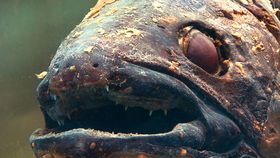


There has been a battle going on between two of Earth’s most ancient fishes (or at least so we thought) as to which it is we have to blame for our ancestors' leap to land, which set us on a path towards renting, work, and alarm clocks. It was once thought the “living fossil” coelacanth was the pivotal missing link between fish and tetrapods – four-limbed terrestrial animals – but recent research finally established that the lungfish is our closest true fish relative.
So where does that leave our old pal coelacanth? It was actually thought to have gone extinct until 1938, when the first-ever living specimen was caught off the coast of South Africa. This put our estimation of their extinction a little off, but what’s 65 million years between friends? Since then we’ve continued to learn more about this "living fossil" whose vintage morphology appears almost identical to the fossil record, but new research published in the journal Molecular Biology and Evolution has found several modern upgrades hiding in their genome.
Led by a team of scientists in Toronto the study sequenced the genome of the African Coelacanth, Latimeria chalumnae, and discovered 62 new genes that came about as they encountered other species around 10 million years ago. These genes are unusual in themselves as it seems they came from transposons (aka selfish genes), a parasitic stretch of genetic material whose sole goal is to replicate themselves. These strange DNA elements can even move between species through a process known as horizontal gene transfer. This can happen several times in the evolutionary history of a species, so tracking down exactly when and via which animals this occurred isn’t easy. While the emergence of this DNA in coelacanths doesn’t appear to have had much of an impact on their anatomy, it’s revealed the dramatic effect that wandering transposon DNA can have on the genes of species they move through.
"Our findings provide a rather striking example of this phenomenon of transposons contributing to the host genome," said Tim Hughes, senior study author and a professor of molecular genetics in the Donnelly Centre for Cellular and Biomolecular Research at the University of Toronto. "We don't know what these 62 genes are doing, but many of them encode DNA binding proteins and probably have a role in gene regulation, where even subtle changes are important in evolution.”
While an insightful body of research, the study leaves many unanswered questions and finding the answers may prove difficult when dealing with an animal that is so rare and hard to find. Still, providing even a glimpse into the genome of one of Earth’s longest-standing residents is not to be sniffed at, and it certainly clears up the way we talk about this fish.
"It was surprising to see coelacanths pop out among vertebrates as having a really large number of these transposon-derived genes because they have an undeserved reputation of being a living fossil," said graduate student Isaac Yellan who spearheaded the study in a statement. "The coelacanth may have evolved a bit more slowly, but it is certainly not a fossil.”