Nature
 PUBLISHED
 36
36


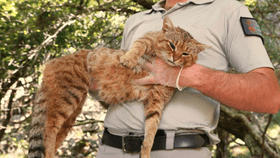


Once considered a myth among shepherds, seen only by fearful farmers in the dead of night, an ongoing project on the Mediterranean island of Corsica set out to uncover the mystery of the ghjattu-volpe, translated as “cat-fox.”
Recent genetic analysis of the elusive wildcat has shown that the ghjattu-volpe could, in fact, be a previously unrecognized species of wildcat, as reported by AFP news agency.
While its status as a new species has not yet been officially recognized, the National Hunting and Wildlife Office (ONCFS) of France hopes their work could help efforts to protect the species and raise awareness of its plight.
“We believe that it's a wild natural species which was known but not scientifically identified because it's an extremely inconspicuous animal with nocturnal habits," said Pierre Benedetti, chief environmental technician of ONCFS in Corsica, in a conversation with AFP.
There are currently two loosely recognized species of wildcat in the world – the European wildcat (Felis silvestris silvestris) and the African wildcat (F. silvestris lybica), although there is some dispute over their exact classification. There are also numerous subspecies of these wildcats, including the Sardinian wild cat (F. lybica sarda) found on the island of Sardinia, Corsica's neighbor. The scientific analysis of ghjattu-volpe hasn’t yet been concluded, however, the researchers hope its genetics could be distinct enough for it to be recognized as a new subspecies, if not a new species.

"By looking at its DNA, we could tell it apart from the European wildcat, Felis silvestris silvestris. It's close to the African forest cat, Felis silvestris lybica, but its exact identity is still to be determined," Benedetti added.
The cat-fox can only be found in a small sliver of the Asco forest in Corsica, a mountainous Mediterranean island located southeast of the French mainland. It might look just like a house pet, but it holds some unique features that set it apart from both domestic cats and other wildcats, most notably its long, slinky ringed tail with a black tip. It was given the name "cat-fox" due to its slender body and tawny-red fur. It’s believed the felines were first brought over to Corsica by humans during the Neolithic era, over 8,000 years ago, most likely as a form of rat-eating pest control.
Remarkably, people only got their first good look at this Corsica native in 2008 when a mischievous individual was found in a chicken coup, Benedetti told AFP. The first few cat-foxes were then only analyzed by scientists some eight years later, in 2016, after the ONCFS caught a dozen individuals on the island.
However, this small wildcat remains a mysterious beast. Conservationists have very little idea about its behavior and diet, nor do they know the size of the population. Perhaps with further research, after decades of legend and speculation, the story of Corsica's ghjattu-volpe might finally be revealed.