Space and Physics
 PUBLISHED
 2
2


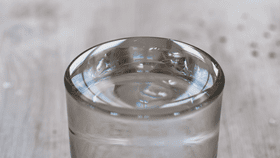


Some nifty physics is currently doing the rounds on The Internet as people on Twitter are sharing a video of a group playing what looks like the wet alternative to Jenga. In the game, competitors take turns adding a drop of water to an already very full cup.
With each tense drop the water rises until it seems impossible that another drop won't burst the tiny, physics-induced dam that appears to exist at the water’s edge. Why doesn’t it spill sooner? It’s all thanks to surface tension.
Overflowing surface tension
If you were to take a glass of water at home, fill it to the brim and start dropping coins into it, you’ll soon see that the volume of water can actually “overflow” without spilling. This is because the water molecules are attracted to each other forming an (albeit quite weak) bond that allows them to temporarily resist gravity.
The stickiness of water is perhaps best demonstrated in space, where astronauts occasionally have to tend to leaks that release Flubber-esque blobs of fluid into their living quarters.
The same effect is what caused Italian astronaut Luca Parmitano to almost drown in space in 2013 when a blob of water began building up inside his suit during a spacewalk. For 23 minutes the blob grew until eventually, it started making the rather threatening move for his nose and mouth, but fortunately Parmitano was able to get inside the space station and remedy the situation.
Back on Earth, water molecules’ attraction is impressive, but not impervious to gravity. As the above video shows, eventually, one last drop in "Water Jenga" will be enough to break the surface tension and send the excess fluid cascading over the glass.
So, next time you find yourself at a loose end with nothing but some liquid and two cups, why not give Water Jenga a go?