Space and Physics
 PUBLISHED
 37
37


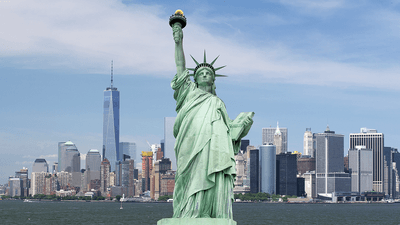


The Statue of Liberty, with its big torch, blue-green color and fancy hat, is one of the most recognizable landmarks on Earth.
But when it was first constructed as a gift from France in 1885, the statue had not yet acquired this color, doing so later as the result of chemistry. The idea of returning it to its original color is gaining a little attention on X (Twitter). So how has the color been altered over the years?
As a video from the American Chemical Society's YouTube channel Reactions explains, the original color of the Statue of Liberty was a rather magnificent copper.
"In her first few decades in the Big Apple, the statue slowly turned from that shiny copper color to a dull brown and then finally to the blue-green, or as they'd say back in France, 'verdigris', we see today," the American Chemical Society explains in their video.
Over the years, several reactions took place. First, the copper reacted with oxygen in the air. The copper gave up electrons to the oxygen, leading to the mineral cuprite, which is a pinkish red. After that, the cuprite gave up more electrons to oxygen, forming tenorite, which is black, causing the statue to become darker still. But that still isn't green.
The water in the atmosphere, when mixed with sulfur, turns to sulfuric acid. When this was mixed with copper oxides on the statue, it began to turn its distinctive green color. Chloride from the sea spray added to this, making the statue even greener.
The statue has remained this color for over 100 years because the exposed copper is now chemically stable, but underneath that layer, it is still the original bronze.
Though it may currently be popular on X (Twitter), when it has previously been suggested that the color be restored to the original copper shade, the public protested the move, as they were now used to the iconic blue-green shade. Of course, if it ever were restored to the original bronze, the process would begin again.