Nature
 PUBLISHED
 3
3


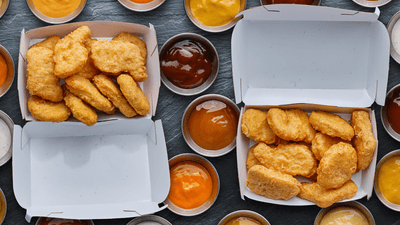


The flavoring of McDonald’s Sweet & Sour dip has sent some TikTokkers into a tailspin after an account revealed which fruit plays a central role in its tang. While some suggested pineapple might be the elusive star of the smooth sauce, others have been left “shaken” by the discovery that it is in fact apricot.
If you’re not familiar with the popular nugget dip, it’s described by McDonald’s as “A sweet/sour apricot flavour, lightly spiced with a sour aftertaste.” Sounds great, right? But the world was apparently not ready for stoned fruit when a popular TikTok account revealed the true flavor inspiration.
The revelation was met with mixed responses. One user in the comments decries "Nah this ruins everything for me," while another says feeding her daughter the dip revealed an undiagnosed apricot allergy.
“When I found out it was apricot I was shaken to my core as didn’t even associate it with fruit,” The Mirror reports one TikTokker said in a separate video. “About a week ago I won a free meal through monopoly and whilst eating the sauce I just became curious about what it was actually made of. So I read the ingredients and was completely shocked to find out it was from apricots.”
Recipes for Chinese sweet and sour sauces don’t typically include apricot, instead leaning on vinegar, ketchup, and soy sauce to achieve that characteristic tang, but it’s not the first time dupes have been introduced to replicate other flavors. It’s also by no means the worst.
There was a time when the anal gland secretions of beavers were used as a flavoring on the food market. With a distinctive vanilla-like musk, it was used in a variety of cakes, sweets, ice creams, and chewing gums during the 1960s and 1970s, and was a flavor additive in many vanilla, strawberry, and raspberry recipes.
Castoreum, as the beaver butt juice is known, was never actually used as a replacement for these flavors, but it was used to enhance them and add additional depth and intrigue to the taste. In the US, the Food and Drug Administration still approves castoreum as a safe food additive and doesn’t require manufacturers to list all the ingredients in their additives, which would be a surprise that would surely shake The Internet more than an apricot.
Fortunately, it’s rarely ever used in the modern era so particular palates are safe for now. Just don’t Google what’s in a peach flan.