Technology
 PUBLISHED
 8
8


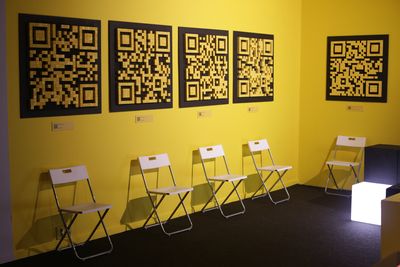


QR codes enjoyed an unlikely resurgence during the COVID-19 pandemic as a "touchless" system to relay information. Even today, the legacy of lockdowns still lingers in some restaurants and bars that ask patrons to scan a QR code to look at a menu (much to their dismay). However, not many people know the surprisingly long and fascinating story of QR codes – and few even realize what the initialism stands for.
QR simply stands for “Quick Response.” The code system was developed in 1994 by Masahiro Hara and his team at DENSO, a Japanese manufacturer involved in the development of barcode technology.
The company was approached by automobile factories who complained that barcodes were no longer fitting the bill since they could only hold around 20 characters of information each. As the inventory of car companies grew and grew, their boxes required numerous barcodes, which was highly inefficient for its workforce.
An epiphany came when Hara, now a chief engineer at DENSO, was looking at the board of the strategic game Go and was struck by the mass of information it could encode.
“We had been making barcode readers for 10 years so we had the know-how. I was looking at the board and thought the way the stones were lined up along the grids … could be a good way of conveying lots of information at the same time,” Hara told the Guardian in 2020.

QR codes proved to be a huge success in the world of Japanese car factories, but Hara was surprised by the many other applications of his invention, including financial payments and tracking infections during the COVID-19 pandemic.
“I’m really pleased that it’s been used to help improve people’s safety. Back in 1994 we were focused on its use in the economy … we never thought it would be used for something like this,” added Hara.
A standard QR code can store up to 7,089 numeric characters, 4,296 alphanumeric characters, 2,953 binary bytes, or 1,817 kanji characters – substantially more information than a simple barcode. Even if the code is distorted or obscured, it is still possible for scanners to understand it, making it highly practical in the unpredictable real world.
Hara has ambitions to build on his masterpiece, though. Speaking at Ahmedabad Design Week 4.0 in January 2023, he hinted that he’s in the process of developing the QR Code 2.0.
“I am in the process of inventing a new QR code. It will take some time, though. Unlike the current version, the new code system will have colors and may be rectangular rather than the present square shape,” the inverter reportedly said at the event.
“The new QR (quick response) code will be designed in such a way that it will be able to store more information compared to the present design,” he added.