Humans
 PUBLISHED
 48
48


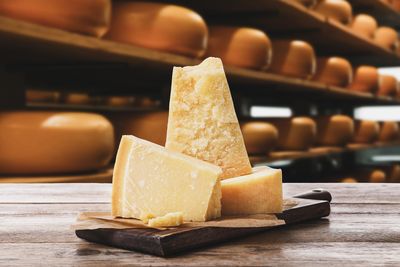


Every so often, the Internet rediscovers a food fact you’d think everyone already knew. But hey, we’re all still learning, right? In recent times, it was paprika and allspice. This time, it’s our old friend Parmesan cheese taking its turn in the spotlight.
"Today years old when I found out Parmesan cheese is made from baby cow’s stomach & I could go cry," one user wrote on Twitter, prompting others to learn this too. "I’m just gonna have to go full vegan at this point."
Parmesan is traditionally made from cow's milk, aged for at least 12 months in copper vats, where it is heated and other ingredients like whey and rennet are added. It's rennet that vegans, vegetarians, and anyone just a bit grossed out by eating the stomach juices of baby cows don't like the sound of.
"Animal rennet is an enzyme obtained from the fourth stomach of an unweaned calf (this can include veal calves, or even lamb and kid)," according to the Courtyard Dairy.
"At that stage in their life they’ve only consumed milk, so the natural enzyme for coagulating milk (chymosin) is present in large quantities. As the calves get older the amount of chymosin reduces and other enzymes take its place (those necessary for digesting other foodstuffs)".
Chymosin helps to separate the milk solids from liquid.
"For cheesemaking, rennet helps to form firm curds and is crucial in finding the right texture for your cheese," the Cheesemaker explains. "Where some recipes will use acid or an acid-producing bacteria to do this, cheesemakers use rennet to better cultivate the final flavor profile of their cheese."
Some cheesemakers now use vegetable rennet to create their cheeses, though most prefer to use traditional methods. This is why as a vegetarian, you should always check before you ask your waiter to dust your wets.
An earlier version of this article was published in April 2023.