Humans
 PUBLISHED
 1
1


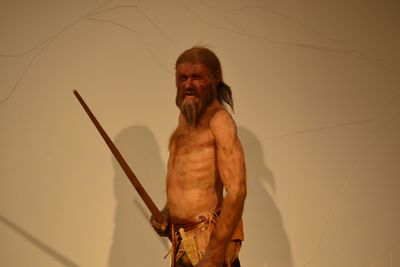


A new digital reconstruction of Ötzi the Iceman’s ribcage shows a number of “ambiguous” features that might have assisted him on his seasonal migration to the frosty Alpine peaks. By comparing the mummy’s thorax to those of several other ancient humans, the authors of a new study dispel a long-standing assumption that Homo sapiens trunks are fundamentally different from those of Neanderthals (Homo neanderthalensis) and Homo erectus.
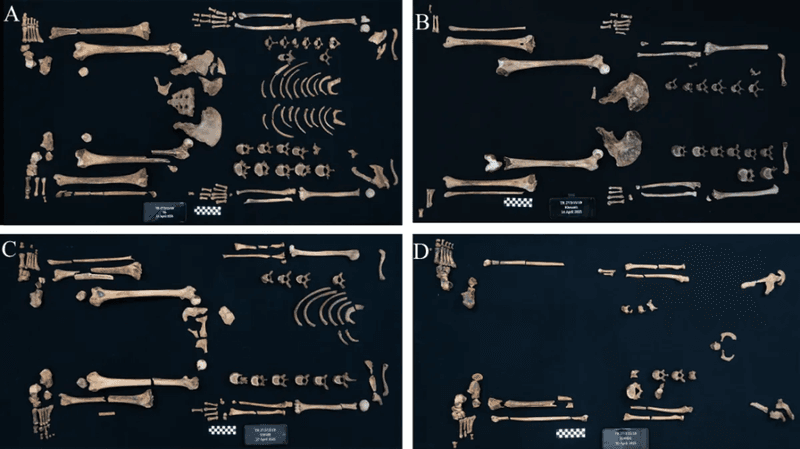
Unlike these extinct hominid species, present-day humans have slender ribcages, which has led scholars to conclude that our daintiness may be a derived condition – meaning it is unique to our lineage and wasn’t present in our predecessors. To determine whether this really is the case, the study authors reconstructed the thoraces of four prehistoric H. sapiens, including an Egyptian specimen called Nazlet Khater 2, an Israeli fossil named Ohalo II H2, the Moravian individual Dolní Věstonice 13, and Ötzi.
The resulting 3D models were then cross-referenced against the ribcages of 59 more recent humans, as well as two Neanderthals and one H. erectus specimen.
Overall, the most remarkable findings concerned the thorax of Dolní Věstonice 13, which was “almost as large as that of Neanderthals, but relatively wider, more similar to [H. erectus],” the researchers write. Such an unexpectedly large ribcage may have helped this individual retain more body heat, which is just as well given that this 30,000-year-old man lived during the Last Glacial Maximum.
According to the researchers, this discovery undermines the widely accepted idea that H. sapiens ribcages are necessarily less stocky than those of Neanderthals and H. erectus. Despite sharing the typical “globular shape” of the modern human thorax, the Dolní Věstonice 13 fossil shows that some early members of our species may have had ribcages similar in size to those of “cold-adapted… Neanderthals”.
Moving onto the Iceman, the authors explain that “the situation of Ötzi is relatively ambiguous since his ribcage is larger than that of Nazlet Khater 2 and Ohalo II H2 but shares with them a similar shape. These mixed thoracic features could have been beneficial for someone like Ötzi, who lived during periods of alternating residence between the southern, temperate European lowlands, and the Alpine region.”
Unlike Dolní Věstonice 13, Ötzi can’t be said to display a Neanderthal-like thorax, although his barrel-chested body plan does suggest that he was specifically adapted to living in cold environments. Such a trait would undoubtedly have come in handy for a man who spent a part of each year roaming the glacial peaks where he was eventually murdered.
Summarizing their data, the researchers explain that “the ribcage of Ötzi presented mixed features, something that could have been beneficial for seasonal alpine transhumance.”
The study is published in the journal Communications Biology.