Nature
 PUBLISHED



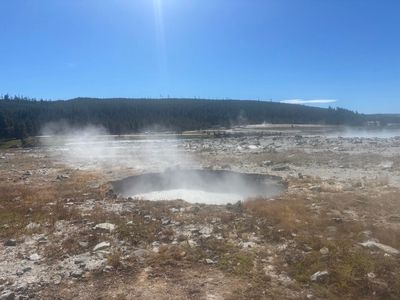


Not long after 5:00 am on Saturday, June 13, it happened. A sudden spike in seismic energy, then a wave of infrasound, and eventually milky-white plumes of water flowing through a normally clear river.
There was only one conclusion: Biscuit Basin, the site in Yellowstone National Park where in 2024 a huge eruption from Black Diamond Pool saw mud, rocks, and hot water spewed at tourists, was At It Again.
This time, though, it wasn’t Black Diamond. Ever since the 2024 eruption, Yellowstone geologists have been monitoring that pool – and when they reviewed the evidence, Black Diamond came up clean.
“[T]he temperature sensor […] data showed only a very small heat blip, after which the temperature slowly dropped to that of the background air,” reported Yellowstone geologists earlier this week, but “nothing resembling the rapid drop that has accompanied past eruptions of Black Diamond Pool”.
“[That’s] a sign that the pool was not the source of the morning’s anomalous event.”
Luckily, that wasn’t the only equipment monitoring the area. The team had also installed a camera overlooking Black Diamond, and when the suspected eruption occurred it just so happened to be pointing in the right direction.
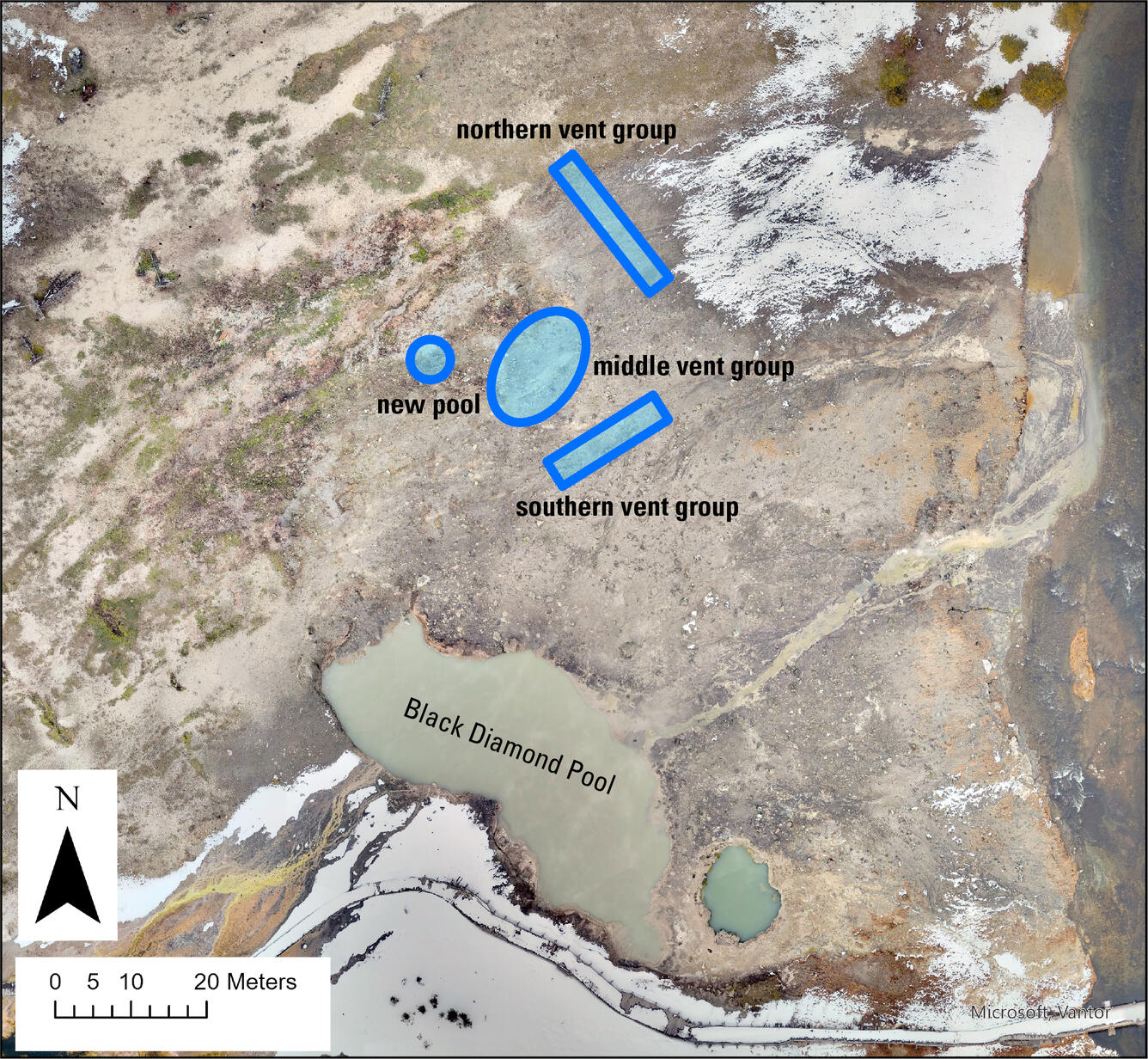
It turned out to be a pool a couple dozen meters north of Black Diamond.
“[We] found clear evidence that large volumes of hydrothermal water had surged into the Firehole River from three sets of newly formed vents,” the geologists confirmed. “These vents represent pathways where water at or even slightly above boiling temperatures beneath the ground suddenly found a pathway to the surface and flashed to steam, driving a hydrothermal explosion.”
Nobody was harmed by the eruption – in fact, nobody would have seen it at all, since Biscuit Basin has been closed to the public since the 2024 eruption.
But that doesn’t mean the explosion had no impact. When geologists returned to the scene a couple of days later they found something surprising: on the very ground they had been walking on only two days earlier, there was now a brand-new pool likely formed after the ground literally collapsed in on itself.
If the pool's entrance to the world was bombastic, so too was its debut. When the geologists went to inspect the new feature, they found a pool a little bigger than two parking spaces in size filled with grey, silty, and “vigorously boiling” water.
“Notable thumping, caused by steam bubbles forming and then collapsing within the pool, startled the team,” they wrote, and “camera observations showed that the pool experienced intermittent episodes of spouting to a height of perhaps about 6–9 meters (20–30 feet).”
“Geologists noted that it was roiling vigorously when not showing this geyser-like behavior.”
While the formation of this pool was particularly dramatic, the appearance of new pools is actually fairly common at Yellowstone. What really makes this one different is just how visible it was, occurring not just in the front country of the park, but also on camera.
For that reason, the park’s geologists are understandably excited about the new pool. “No hydrothermal explosion has ever occurred this close to a monitoring station!” they wrote.
For the Yellowstone geologists, therefore, the next few weeks will be spent poring over various data and observations from before, during, and after the latest eruption. And with such an unexpected wealth of information about the event, they really do have a lot to get into.
“If there were any seismic or infrasound precursors, there is a good chance they were recorded,” the team pointed out. “The June 13, 2026, explosion thus offers an unprecedented opportunity to better understand this critical hazard in Yellowstone National Park and perhaps learn more about their potential warning signs.”


 1
1