Space and Physics
 PUBLISHED



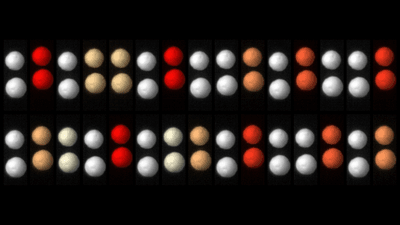


Time crystals are probably one of the most fascinating recent discoveries in physics. We know what a regular crystal is – a structure that repeats in space. Think of quartz, for example. A time crystal, however, is a system that repeats in time, but with a caveat. The behavior needs to be spontaneous and not imposed from the outside. A clock, for example, is not a time crystal. But now, researchers have developed a simple time crystal you can see with the naked eye.
Believed impossible just over a decade ago, time crystals have turned up in children's toys and in a variety of quantum systems. In this latest development, researchers have delivered one based on classical physics: acoustics and waves. Sound waves can be used to make things levitate, just like a science-fiction tractor beam. Things have to be light; they are usually droplets or styrofoam beads. Still, it is a very cool demonstration.
Now, researchers have shown that something really intriguing happens when you have two beads of slightly different sizes. The beads levitate thanks to the sound waves, but they also reflect some of the sound waves back. When two beads of different sizes are put in the same levitator, they will reflect waves in a different way, and the team found that the interaction between the two would give rise to four different dynamical states. The team showed that two of them can be tweaked to be time crystals.
“Sound waves exert forces on particles – just like waves on the surface of a pond can exert forces on a floating leaf,” lead author Mia Morrell, an NYU graduate student, said in a statement. “We can levitate objects against gravity by immersing them in a sound field called a standing wave.”
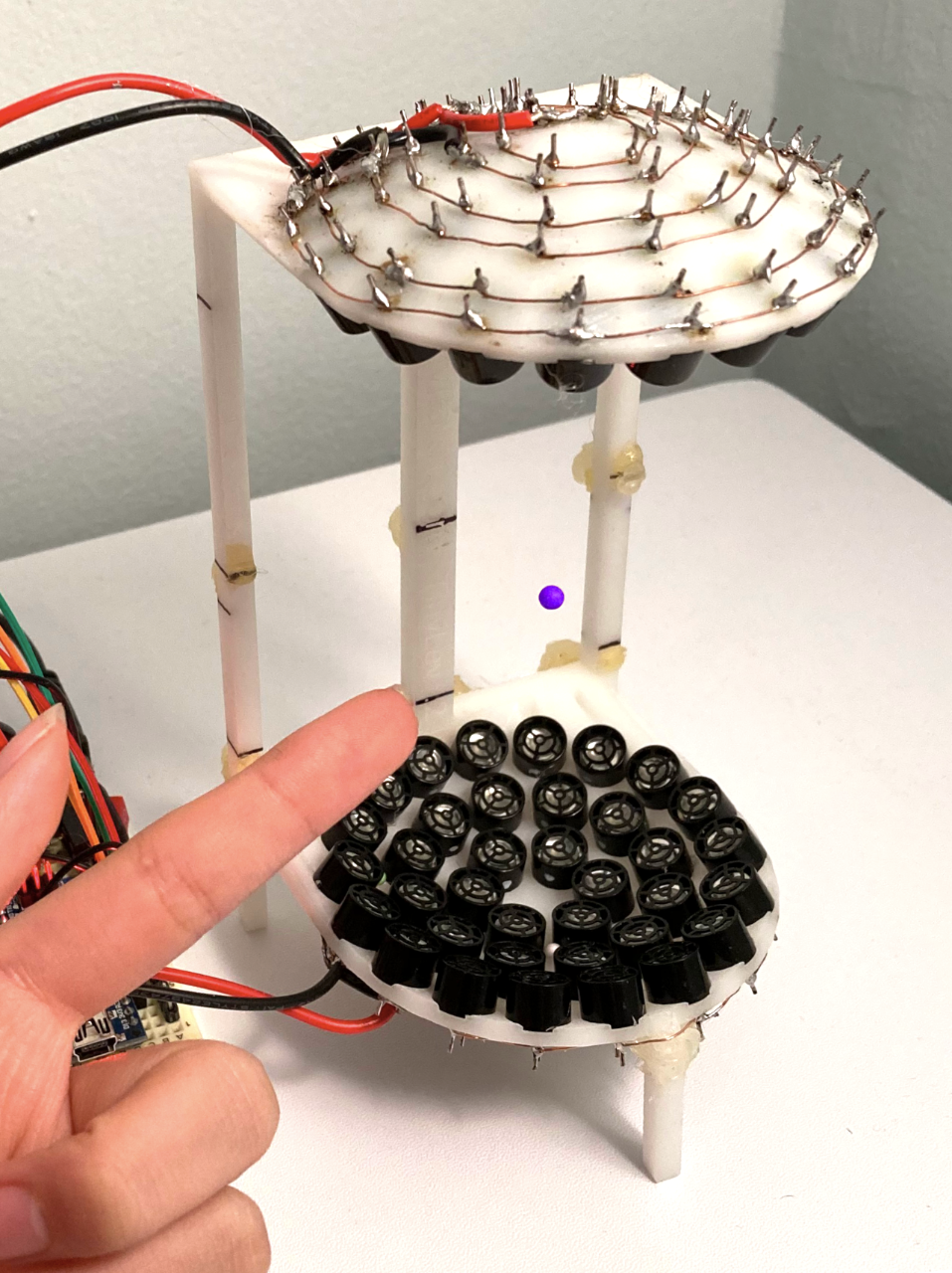
The key is the difference in size between the beads, changing how they reflect the sound waves and so how they affect each other.
“Think of two ferries of different sizes approaching a dock,” Morrell continued. “Each one makes water waves that pushes the other one around – but to different degrees, depending on their size.”
Since their discovery, time crystals have become a very intriguing field of research. Scientists are investigating their potential in quantum computing and data storage, and having a system you can see could provide new insights and a test bed for research that doesn’t need complex setups.
“Time crystals are fascinating not only because of the possibilities, but also because they seem so exotic and complicated,” said Physics Professor David Grier, director of NYU’s Center for Soft Matter Research and the paper’s senior author. “Our system is remarkable because it's incredibly simple.”
The study is published in the journal Physical Review Letters.