Space and Physics
 PUBLISHED
 1
1


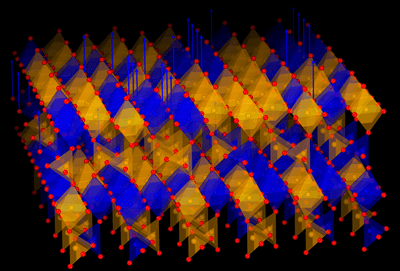


An oxide of strontium, iron, and cobalt can absorb and release oxygen, depending on the gases passing over it, with a high number of cycles. This means it could fill a gap in our production of fuel cells that turn hydrogen into electricity, as well as a variety of other potential applications.
Oxygen is very reactive, and there are many materials that will bond with it in some circumstances and release it in others. Plants and animals, in their different ways, have both made this a key part of their success. However, the process can be perilous, frequently degrading materials quickly. In other cases, the temperatures required to make a material “breathe” are sufficiently extreme, for example in temperature, as to limit the applications.
Consequently, a team led by Professor Hyoungjeen Jeen of Pusan National University sees their discovery of a thin film crystal that cycles sustainably at low temperatures as a major innovation. “It is like giving the crystal lungs and it can inhale and exhale oxygen on command,” Jeen said in a statement.
Those commands are issued by switching between exposure to oxygen and hydrogen/argon gas. Crystals may be cutting into our territory by breathing, but their comprehension of instructions remains limited. However, where other materials require temperatures that are expensively high to release oxygen, the new oxide does it at 400°C (752°F).
The crystal’s formula is SrFe0.5Co0.5O2.5. Although strontium, iron, and oxygen are abundant on Earth and not expensive, the presence of cobalt may obstruct mass production, given that the cost has driven manufacturers to alternatives in batteries, and the human rights abuses associated with production.
“This finding is striking in two ways: only cobalt ions are reduced, and the process leads to the formation of an entirely new but stable crystal structure,” Jeen said. The presence of the iron is nevertheless apparently essential to maintain structure. When an oxygen-rich airflow was provided, the original form was restored.
The original structure is known as a brownmillerite. The replacement after reduction through hydrogen is a perovskite, with the same underlying format as the solar cells considered the future of photovoltaics.
Besides the potential to make fuel cells more competitive with batteries, the crystal could have applications in smart windows, which let heat through or keep it out depending on conditions inside. A further use might be thermal transistors, which send heat in different directions depending on requirements.
“This is a major step towards the realization of smart materials that can adjust themselves in real time,” said Professor Hiromichi Ohta of Hokkaido University. “The potential applications range from clean energy to electronics and even eco-friendly building materials.”
The study is published in Nature Communications.