Culture and Society
 PUBLISHED
 4
4


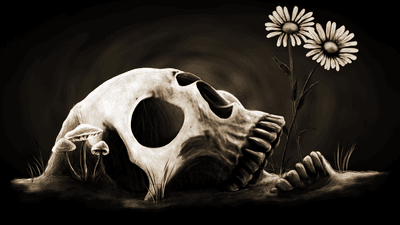


We might not get to choose how we die, but we do get to have a say about what we would like to happen next. For this writer, the prospect of becoming human compost is the most appealing (that is, if I can’t become a fossil). Others prefer to make an appearance at their funeral embalmed to the nines, and for some the finality of cremation fits best.
The miniscule risk of being buried alive is enough to put some people off the idea of going into the ground (a particularly frightening prospect in the context of Lazarus syndrome). Historically people have even patented "safety coffins" with a built-in bell for letting people above ground know that you're not dead yet. However, here to make the case for good old burial is *checks notes* an astrophysicist.
Yes, it seems a little out of lane for someone who studies the stars to be making bold claims about what one should do with their dead body. You’ve got to hand it to Neil deGrasse Tyson, however. He makes a compelling argument for the transformative power of a hole in the ground.
“In death you’ve got pretty much two choices in modern society,” he said on his chat show, StarTalk. “You can be buried. That’s my choice, so that the energy content of my body – which is still there when you die, your molecules were built up from your lifetime of eating and exercising and the building of your organs and your muscles and other tissue. In death, those molecules still contain energy.”
“If I’m buried and I decompose, all that energy gets absorbed by microbes. By flora and fauna dining upon my body, the way I have dined upon flora and fauna my whole life. In that way, giving back to the Earth.”
It’s worth noting that if you, too, want to give back to the Earth, you probably don't want to have an open casket at your funeral (not unless you want to go the way of the exploding pope). Open caskets require corpses to be embalmed – a common funerary practice in which the body is drained of its natural fluids. The corpse is then injected with an embalming fluid – usually made up of formaldehyde, alcohols, and phenols – that goes in through an artery and pushes the remaining blood and other fluids in the vessels out through an exit hole in the jugular vein.
The process doesn’t halt decomposition completely, but it does significantly slow it down. It buys the body enough time to go on display before going into the ground, where it can then take several decades to decompose fully.
Not all bodies are embalmed before burial. An untreated corpse typically starts to break down within a year, but there is a way things can move much faster.
Human composting – considered one of the greenest ways to go – can turn a person into nutrient-rich mush through natural organic reduction. A specific recipe of alfalfa (for nitrogen), leaves, straw, and water facilitates the process, which can be complete in around two to three months.
Of course, there is a faster route still for breaking down a human body. One that deGrasse Tyson says can take you to the stars.
“If you’re cremated, the energy content of those molecules – it doesn’t go away, it gets transferred to heat,” he said. “That then radiates infrared energy, that was once the energy content of the molecules of your body, [and] radiates it out into space, moving at the speed of light.”
“After someone has been cremated you can keep a timeline,” he said. “Where has their radiant energy reached by now? If they were cremated four years ago, they would have reached the nearest star system, Alpha Centauri. So that in a way you’re still a part of the universe, just in a different form.”
At the end of the day, the only right choice is the one you want. It’s your corpse. Have fun with it.