Culture and Society
 PUBLISHED


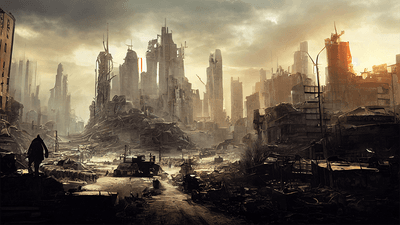


Almost a third of people living in the USA and Canada believe that the world will end within their lifetime. According to new research, this could affect how they view the challenges facing society, though this very much depends on what kind of apocalypse the individual is envisioning.
Throughout history, there have been plenty of people who have thought that they were living in the end times. As you are reading this, you have probably noticed that hasn't happened, and may feel like apocalyptic events are far off in the future, or not worth worrying about. But for a significant number of people living in the US, it doesn't seem like a distant possibility, with a third of respondents stating that the world will end before they do.
It would be tempting for some to dismiss these views as "belonging to cranks", but with such a significant number of people sharing these beliefs, it is certainly worthy of investigation.
"Belief in the end of the world is surprisingly common across North America, and it’s significantly influencing how people interpret and respond to the most pressing threats facing humanity," Dr Matthew I. Billet, lead author of the study, said in a statement.
In the new study, the team were interested in how these beliefs might shape people's reactions to real threats in the world, from the climate crisis to the possibility of nuclear conflict.
Researchers from the University of British Columbia surveyed 3,400 people, asking them a range of questions designed to measure their attitudes towards risk. Specifically, they looked at risk perception, or how big a threat they perceived, for example, the climate crisis, to be, risk tolerance, or how much they are prepared to tolerate the risk despite possible negative impacts, and their support for "extreme action" in order to avert the risk.
"The extreme actions were devoting 10% of the GDP of the USA towards the risk, instituting martial law, and completely overthrowing the current government and social order," the paper explains.
As well as this, the participants were asked a range of demographic questions, including factors like political orientation and religiosity. The team found some interesting differences.
While 28.9 percent of people agreed that the world would end in their lifetime overall, the belief tended to decline with age, with the young more likely to hold that worldview. Looking further into the data, the team found that there were exceptions; end-of-world beliefs did not decline as Evangelical Protestants aged, and could even increase slightly among Muslim participants.
"Other demographic variables were less consistent predictors of end of world beliefs," the paper adds. "Socioeconomic status and political orientation each explained less than 6% of variance, and ethnicity and gender each explained less than 2%."
The team found that people's desired response to the threat depended on whether they thought that humans were causing it. Those who did were more likely to support extreme action, whilst those who believed the apocalypse would be due to divine forces were less likely to support extreme action.
"Everyone agrees on one thing: We humans play an important role in the fate of our species," Billet explained. "This was as true for the religious as it was for the non-religious. However, there were also differences between religious denominations that were quite stark. These differences point to how religion –and culture more broadly – can shape how we fundamentally view the world and our collective future."
Overall, the team found that five key factors defined how people think and act. These were how close the perceived threat was, whether they believed humans to be responsible for it, whether they believed divine or supernatural forces to be responsible for it, how much influence they personally could have over the outcome, and whether the end outcome would be positive or negative.
With vaccine conspiracies affecting vaccine efforts, and the dread of the climate crisis demotivating the young from acting, Billet says that understanding these worldviews is vital to policymakers.
"Whether or not any particular apocalyptic narrative is accurate, they are still consequential for how populations confront concrete risks," Billet added. "If we want to build consensus around addressing climate change, AI safety or pandemic preparedness, we need to understand how different communities are interpreting these threats through their own cultural lenses. In a world facing genuine catastrophic risks, that understanding has never been more important."
The paper is published in the Journal of Personality and Social Psychology.