


 Nature
 PUBLISHED


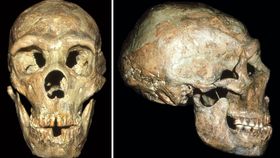


Neandertals get such a bad rap. Sure, they weren't particularly pretty, they probably ate each other, and they had weirdly high-pitched voices. But for all their downfalls, these hairy beings displayed a surprising amount of humanity.
A new study in the journal PLOS ONE strongly suggests that Neandertals helped care for the less-abled in their communities.
Anthropologists have been studying the 50,000-year-old remains of Shanidar 1, a Neandertal man discovered in Shanidar Cave in Iraqi Kurdistan. Despite being deaf, sustaining multiple debilitating injuries, and missing part of his arm, this guy managed to live well into his 40s, indicating that he received help from others to survive the dog-eat-dog world of the Pleistocene era.
"More than his loss of a forearm, bad limp and other injuries, his deafness would have made him easy prey for the ubiquitous carnivores in his environment and dependent on other members of his social group for survival," Erik Trinkaus, study co-author and professor of biological anthropology at Washington University, said in a statement.
The recent analysis of Shanidar 1 revealed he had sustained a blow to the head at a young age, resulting in the development of bony growths in his ear canals which would have caused profound hearing problems. He was also missing his right forearm below his elbow, perhaps also sustained sometime before his death. This disability would have made life extremely tough for a hunter-gatherer yet he managed to survive to a ripe age. Unless he was exceptionally lucky throughout his life, it seems he must have had some help from his pals.
Other Neandertals' remains have been found with injuries. However, Shanidar 1 is one of the oldest surviving individuals appearing to have had disabilities throughout life.
"The debilities of Shanidar 1, and especially his hearing loss, thereby reinforce the basic humanity of these much maligned archaic humans, the Neanderthals," said Trinkaus.
Outside of this particular study, there’s plenty of evidence to suggest that Neandertals were intelligent beings, not simply the heavy-browed hulking humanoids they are often depicted as today.
The study concludes by saying: “The inferred presence of social support among at least the Neandertals should not be surprising. There is abundant evidence of intentional burial of the dead, even if not all of the known remains derive from such burials.”
“Explicit mortuary practice reflects, ultimately, the presence of social cohesion, social roles, and hence mutual support, such as would have led to the caring of the impaired."




 1
1