Humans
 PUBLISHED
 15
15


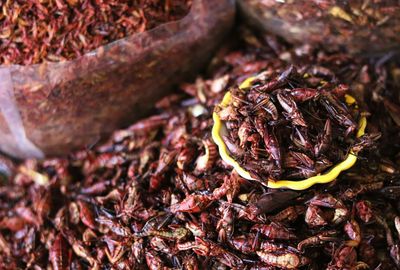


Insects may be full of protein, but they weren’t on the menu for prehistoric hunter-gatherers in Europe or Central Asia. Even today, people descended from these ancient populations lack the ability to digest bugs, which may partially explain the repulsion some westerners feel at the thought of eating creepy-crawlies.
With the world’s population soaring beyond the 8 billion mark, organizations like the UN’s Food and Agriculture Organization have highlighted insects as a sustainable food source that may be able to meet the growing demand for sustenance.
In total, 1,611 insect species are listed as edible, and many are considered delicacies in tropical regions, though entomophagy – meaning the consumption of bugs – faces huge cultural resistance in the world’s temperate regions.
To find out why, researchers analyzed ancient DNA in dental plaque retrieved from 18 Neanderthals, 745 anatomically modern humans and 96 great apes, including chimpanzees and gorillas. Dating back to the pre-Neolithic period, the human plaque samples revealed tiny amounts of insect DNA, suggesting that the consumption of arthropods was extremely rare and probably accidental among prehistoric Europeans.
Our results may support a recent hypothesis that attributes the elevated values of nitrogen isotopes reported for Neandertals to their regular consumption of insect larvae in animal corpses.
Manuel Piñero
In contrast, Neanderthal dental calculus contained as much insect DNA as that of chimps, hinting at more regular insect ingestion. Flies and mosquitoes, in particular, were heavily represented in the Neanderthal samples, possibly because these ancient hominins habitually consumed rotting meat which contained maggots or the eggs of flying insects.
“In this regard, our results may support a recent hypothesis that attributes the elevated values of nitrogen isotopes reported for Neandertals to their regular consumption of insect larvae in animal corpses,” explained study author Manuel Piñero in an email to IFLScience.
To understand why prehistoric Europeans refused to eat grubs, the researchers analyzed 1,663 ancient genomes in search of genetic variants that code for the production of two enzymes that break down chitin, a major component of insects’ exoskeleton.
Results showed that ancient humans living close to the equator possessed the right genetic toolkit to digest chitin, but that the ability to consume bugs decreased steadily as distance from the tropics increased.
As a result, ancient humans in Europe and the colder parts of Asia lacked the capacity to stomach insects. This ability appears to have been lost before the Neolithic revolution some 9,000 years ago, and compromised chitin digestion has remained fixed in modern populations throughout the temperate regions of Eurasia ever since.
“In the tropics, edible insect species can be harvested in large numbers without a lot of effort. Thus, eating insects becomes an advantageous dietary practice, and their digestibility favoured by natural selection,” says Piñero.
“In contrast, this valuable food resource is scarce and highly seasonal in northern latitudes, especially in winter, which relaxed selection to maintain adaptions for their consumption in ancient Europeans.”
Neanderthals, meanwhile, do appear to have possessed the genetic variants necessary for digesting chitin – despite the fact that they too lived in the colder parts of Eurasia. The study authors also analyzed one Denisovan genome, which was also well adapted to the consumption of insects.
Despite the fact that much of the world’s population lacks the ability to digest bugs, the study authors insist that insects could still represent a sustainable option for feeding future humans. However, farmed grubs may need to be processed in order to remove their exoskeletons before they can be served up for consumption.
“Insect scarcity in northern latitudes no longer represents a limitation for exploiting such a sustainable resource,” says Piñero. “To increase digestibility, partial or total elimination of chitin can increase the acceptance of insect products.”
The study is published in the journal Science Advances.