Humans
 PUBLISHED
 1
1


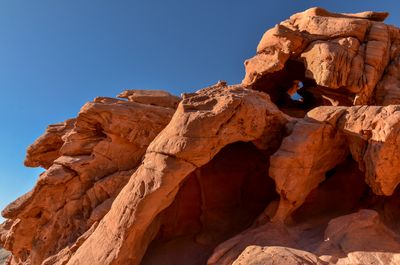


After a video of two men destroying ancient rock formations at Lake Mead went viral earlier this month, park rangers are now asking the public for information to help identify the suspects.
Footage of the incident, believed to have been taken on April 7, showed two adult males standing on top of a sandstone formation on the Redstone Trail at Lake Mead National Recreation Area and toppling the rocks, which were destroyed on impact with the surfaces below.
The video was posted to Instagram account TouronsofYellowstone – an account that often highlights the bad behavior of visitors to national parks and not one to mince words whilst doing so – who called it, “Two idiots destroying what nature created over thousands of years.”
The post also mentioned that the footage had been sent to the National Park Service (NPS), which has now responded to the incident on social media. Alongside an image of the two men, the NPS put out a call to the public for information – specifically those who were on the trail the evening of the incident – in the hopes of identifying the vandalism suspects.
“You don't have to tell us who you are,” the post said to potential witnesses, “but please tell us what you know.”
The NPS takes a tough stance on cases of vandalism against ancient features such as the trail’s formations, calling it “an act of cultural violence”. The dunes that the formations were created from are estimated to be around 140 million years old.
If the two men seen in the footage are identified, John Haynes, public information officer for the Lake Mead National Recreation Area, told Fox 5 KVVU-TV that they could be charged with a federal crime. “It can range from six months in jail and a $5,000 fine… all the way up to a felony offense,” said Haynes.
Unfortunately, the prospect of punishment doesn’t seem to put people off messing around with nature, particularly along the theme of rocks. Boy Scout leaders received third-degree felony charges back in 2013 after pushing over a 200-million-year-old rock formation, whilst an artist was handed a lifetime ban from all national parks after plastering their Instagram handle over rocks in seven of them.
Recent years have also seen unauthorized rock cairns pop up in US national parks; though originally intended to help hikers navigate, people have taken to moving stones for more ornamental purposes.
If you’re not sure what is and isn’t appropriate behavior in a national park (though destroying ancient rocks should be a fairly obvious one), take a look at the “Leave No Trace” principles.