Space and Physics






What you'll discover in this article
- NASA's Swift Telescope has a 90 percent chance of falling back to Earth before 2027 after dropping over 250 kilometers in orbit since launch.
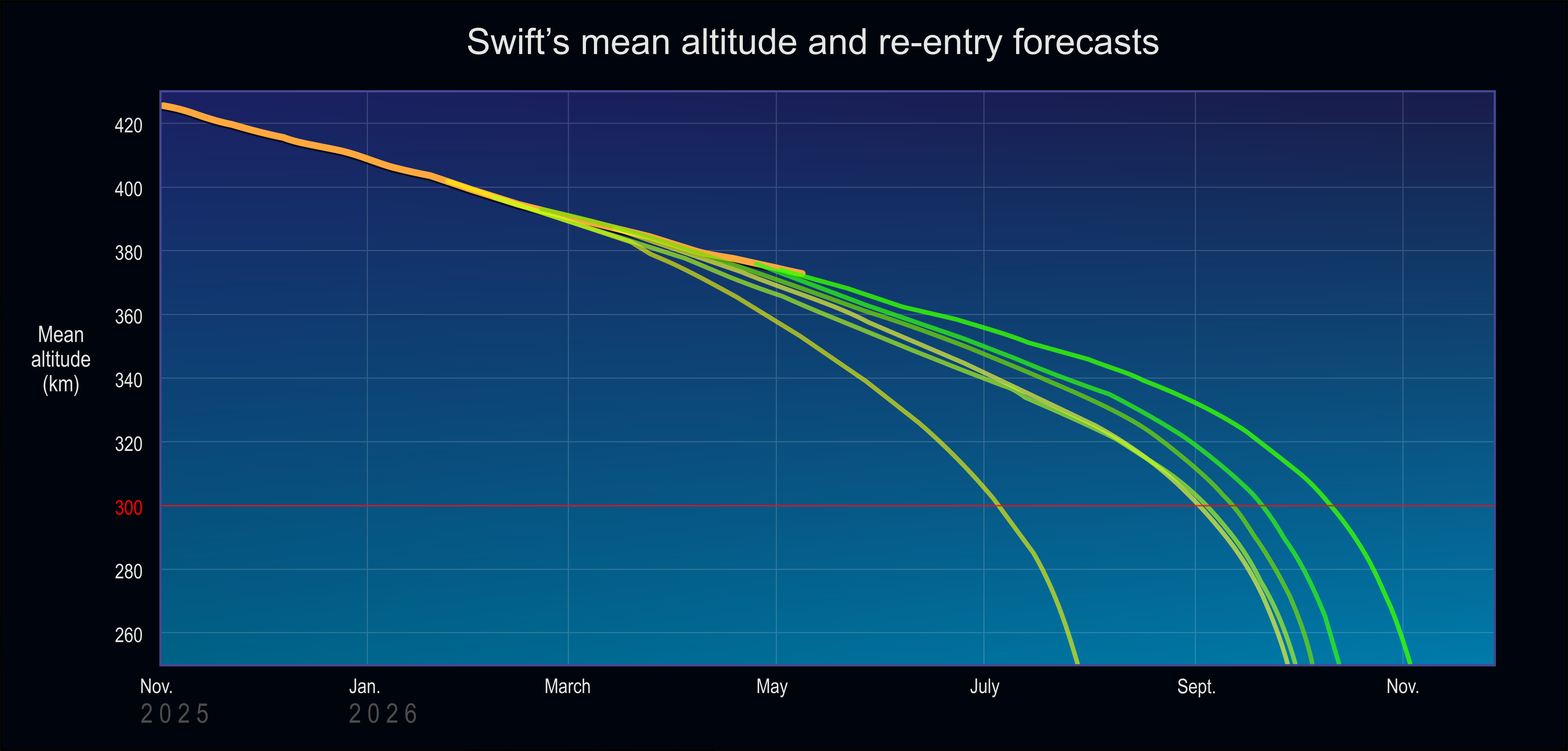
- The 1.6-ton observatory could make an uncontrolled re-entry if it reaches the critical threshold of 300 kilometers (185 miles), which it could reach as early as July.
- A daring never-before-done rescue attempt by NASA and Katalyst Space will attempt to reboost the spacecraft to its original orbit.
Since 2004, the Neil Gehrels Swift Observatory has been a unique eye on the brightest and most energetic kind of celestial explosions in our universe: gamma-ray bursts. Unfortunately, without external intervention, it is doomed to burn up in the atmosphere by the end of this year. That's where a daring rescue mission launching this week comes in. NASA and private space company Katalyst Space will attempt something that has never been done before: they will launch a spacecraft to grab a telescope and move it to a safer orbit.
Swift started with an altitude of 600 kilometers (370 miles), but atmospheric drag over the past two and a bit decades since its launch in 2004 has slowed the spacecraft down and shrunk its orbit, dropping it down to about 338 kilometers (210 miles). The intense solar activity of the 2024 solar maximum led to a swelling of the Earth’s atmosphere, increasing the drag even more and pulling it into its current fateful death spiral.
Back in November 2025, it was calculated that there was a 50 percent chance that the telescope would fall back to Earth and burn up in the atmosphere by June 2026 and a 90 percent chance that this would happen before 2027.
Swift discovers hundreds of gamma-ray bursts every year. It has no equivalent, and there is no plan for a follow-up mission. So, despite Swift not being designed for docking or on-orbit servicing, a spacecraft will attempt to connect with it and lift it to a safe orbit.
A daring rescue mission
Katalyst Space Technologies won the contract for the mission, which is called LINK, in the latter half of last year. LINK successfully launched aboard a Northrop Grumman Pegasus XL rocket at 4:36 am ET on July 3, and Katalyst has confirmed it has reached orbit. The rescue attempt is expected to take place three to four weeks after launch, before it can drop to the critical threshold of 300 kilometers (185 miles). NASA's latest predictions suggest that could be as early as July.
The rescue maneuver itself is expected to last from about a month to a month and a half, after which LINK will separate, hopefully following a successful shift of the telescope's orbit.
It’s not just the attempt that is audacious. It is also the timescale in which this mission has been put into practice, going from approval to launch in less than a year.
“What the Katalyst team has accomplished in just eight months is extraordinary,” Ghonhee Lee, CEO of Katalyst Space, said in a statement.
“The team designed, built, tested, and integrated a robotic spacecraft capable of performing one of the most ambitious commercial servicing missions ever attempted. Completing encapsulation marks the transition from development to operations.”
“We’re doing this on a time scale that’s kind of crazy by space standards,” said Brad Cenko, a research astrophysicist at NASA’s Goddard Space Flight Center and principal investigator for Swift. “It’s a different risk posture than NASA is used to working with.”
A space hug
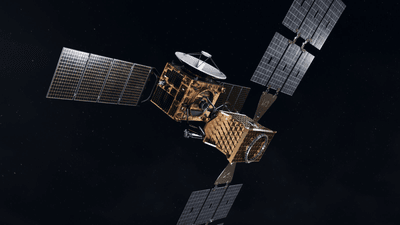
The LINK spacecraft weighs about 360 kilograms (800 pounds) and is 1.5 meters tall, so about a third of Swift's size. It has 6 meters of solar panels and robotic arms designed to grab the ailing telescope.
It launched aboard a Northrop Grumman Pegasus XL rocket from Kwajalein Atoll, part of the Republic of the Marshall Islands in the South Pacific Ocean. LINK will then rendezvous with Swift, using its robot arms to grab onto and slowly raise Swift's altitude over the next few months.
Swift hasn't been conducting any science since February because the mission team has placed the spacecraft and its solar panel in a position designed to minimize drag and ensure the space telescope doesn’t fall back down before LINK has a chance to save it. If succesful, this could be a game-changer for the lifetime of space missions.
"Swift wasn't designed to be serviced," said Lee. "By demonstrating we can quickly and cost-effectively extend its lifetime, we're creating a blueprint for servicing spacecraft that were never designed for on-orbit maintenance.
If we're going to build an enduring presence beyond Earth, we need the capability to manipulate our environment in space. That means deploying robotic spacecraft that can reposition, repair, refuel, and refit satellites after launch.”
This article was updated to include that Katlyst confirmed LINK successfully launched aboard a Northrop Grumman Pegasus XL rocket at 4:36 am ET on July 3 and has reached orbit. More details about the rescue operation will come in due course.