Space and Physics
 PUBLISHED



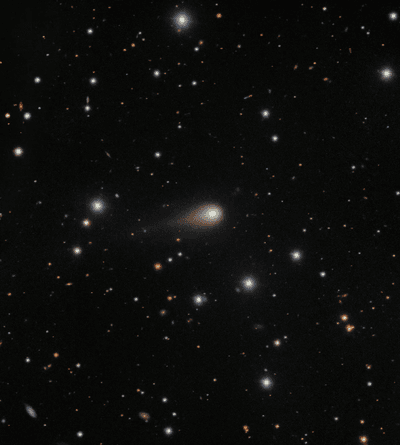


Interstellar comet 3I/ATLAS is still the talk of the town, and we might finally get a flurry of new images and data. This extraordinary celestial body, the third known interstellar object, has been monitored since its discovery on July 1. NASA has several telescopes and missions that have looked at 3I/ATLAS, and is at long last sharing the images that have been taken over the last few months.
The reason for the delay has been the US government shutdown, which lasted 43 days – the longest in US history. NASA and other federal agencies were shut down except for essential personnel, which meant the analysis of exciting new data was not happening. NASA will host a press conference on Wednesday, November 19, at 3 pm EST, to share all the imagery collected during those weeks.
The most intriguing results are likely coming from Mars. The shutdown coincided with comet 3I/ATLAS passing relatively close to Mars. On October 3, it was almost 29 million kilometers (18 million miles) from the Red Planet. Observations from the European Space Agency (ESA) missions Mars Express and ExoMars Trace Gas Orbiter were released the day after the passage, and even China's Tianwen-1 orbiter snapped a photo released a few weeks ago. The data from the ESA orbiters actually improved the orbit estimation of the comet by 10 times.
NASA images were still being uploaded to public websites during the shutdown, and citizen scientists published some that seem to show the comet in the Martian skies. Without the team's confirmation though, it was difficult to be certain of what it was. The missions on and around Mars were not exactly designed to study faint objects in the sky.
There might be more surprises in the press conference. ESA is using its Jupiter-bound mission JUICE to study the comet. NASA’s Europa Clipper, also bound for the Jupiter system, flew behind the tail of 3I/ATLAS, between October 30 and November 6. We do not know if the essential team keeping an eye on the mission was allowed to do some spontaneous observations. If they were, they might have unique data: cosmic dust formed in a whole different planetary system, one that might predate our own by billions of years.
How to watch the Comet 3I/ATLAS NASA Livestream
You can watch the press conference on NASA+, the NASA app, the agency’s website, or the YouTube video embedded in this article.