Culture and Society
 PUBLISHED





Having some sort of state animal is standard fodder for most places in the US – three states have the bison, Tennessee honors the iconic raccoon, and Texas couldn’t choose and went for a plethora of state mammals. But what about the more… unconventional state symbols? Some lurk beyond what can be seen with the naked eye – and in your beer.
We’re talking about the tiny wonders that are microbes, or microorganisms, and quite right that they should be honored too. There are an estimated five nonillion microbes that live on our planet, thought to be made up of one trillion different species – an astonishing level of diversity.
And for better or for worse, they affect our world every second of every day. Microbes can spark devastating pandemics and wreak havoc on aquatic ecosystems, but they’ve also given us new ways to treat disease and tackle plastic waste.
Designating a microorganism as a state symbol is one way of recognizing the significant role they play – and the first state to do it was Oregon.
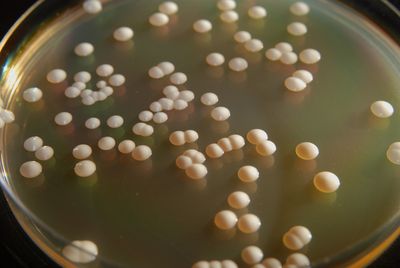
It began in early 2013, when a group of state representatives introduced a concurrent resolution to make the state’s official microbe Saccharomyces cerevisiae, better known as baker’s or brewer’s yeast. It’s used by – well, bakers and brewers – because it can ferment carbohydrates into carbon dioxide and ethanol. The CO2 helps doughy baked goods rise, while in brewing, it provides not only the alcohol content of beverages like beer, but also distinctive flavors.
Its role in brewing was one of the key reasons it was proposed to be a state symbol, with representatives stating that S. cerevisiae “has inspired a thriving brewing culture in this state, making Oregon an internationally recognized hub of craft brewing.”
They also acknowledged the important role the fungal species plays in scientific research; it was the first eukaryotic organism to have its genome completely sequenced, and it’s frequently used as a model organism for all kinds of different types of research.
And so, after successfully passing through both the State House and Senate, S. cerevisiae officially became Oregon’s – and the USA’s first-ever – state microbe on May 29, 2013.
New Jersey was the next state to make such a move by introducing a bill in 2017 that sought to crown Streptomyces griseus as its state microbe. A species of bacteria, researchers at the state’s Rutgers University used it to create streptomycin, the world’s first effective antibiotic for treating tuberculosis (TB). While TB continues to be the world’s deadliest infectious disease, the discovery in 1943 led to a significant drop in deaths in US in the decade following its release.
That first bill for the microbe’s designation ended up being a false start, but a second attempt eventually made it through the state legislature in 2019, with Governor Phil Murphy signing S. griseus off as the state microbe on May 10.
The third – and for now, last – state to honor a microbe is Illinois, and its choice harks back to a moldy cantaloupe found in a market in Peoria in the early 1940s. It turned out that mold was Penicillium rubens, and scientists at the nearby USDA Northern Regional Research Laboratory – now known as the National Center for Agricultural Utilization Research – discovered that it could produce the antibiotic penicillin at far greater yields than had ever been achieved before.
Luckily, that discovery came just in time for the Allied invasion of Normandy, France, in 1944 during World War II; it allowed for the mass production of penicillin that would end up being used on the front to treat soldiers with bacterial infections and save lives. That’s no small achievement, so it’s perhaps no wonder that P. rubens was made the Illinois state microbe in 2021.
Which state will be next, and which microbe will they pick? With trillions of species out there, it’s not as if they’re lacking in options to choose from – so get to it, states!